Looking for the right 1/2 inch or 1 inch valve? This guide compares five compact options, highlighting who they are best for, why they were selected, and any practical limitations. Ideal buyers include homeowners working on DIY plumbing, small-scale irrigation managers, and engineers selecting components for light industrial systems. A quick summary table below helps you compare at a glance.
| Product | Size | Best For | Key Benefit |
|---|---|---|---|
| Beduan 1/2″ Brass Mini Ball Valve | 1/2″ NPT Male x Female | Residential repairs and tight spaces | Double-seal design for bidirectional flow |
| Midline Valve 1″ Full Port Brass Valve | 1″ FIP | Reliable water service lines | Full port for maximum flow |
| SKLSSVF 1″ Stainless Steel Ball Valve | 1″ NPT Female | Harsh environments and safety-focused projects | Premium 304 stainless steel with locking handle |
| Homewerks VBVP40E5B Ball Valve | 1″ | Residential plumbing and DIY projects | Schedule 40 body, dependable shut-off |
| Luventuia 1″ Full Port Brass Valve | 1″ NPT | Inline shut-off in water systems | Full port with anti-static device |
Note: Each option has distinct materials and design features. The best pick depends on your environment, desired throughput, and maintenance considerations. The table above highlights the core differences to guide quick decision-making.
Beduan 1/2 Inch Brass Mini Ball Valve

Material: Chrome Plated Brass. Size: 1/2″ NPT Male x 1/2″ NPT Female. The double-seal system allows flow in either direction. Best For: Home plumbing repairs and compact installations where space is limited. Why chosen: Durable brass construction and a bidirectional seal support reliable shut-off in tight spaces. Limitation: The 1/2″ size is best for smaller lines; larger flow requirements may need a bigger valve.
Midline Valve 822T223-NL Premium Full Port Brass Valve

Material: Heavy Duty DZR Lead Free forged Brass. Includes CSA, UPC and ANSI certifications. Feature: Full Port chrome ball for optimal water flow. Best For: Primary water supply lines and fixtures where maximum flow is desired. Why chosen: Full-port design minimizes resistance, improving throughput. Limitation: Brass valve sizing and certifications may be overkill for small residential repairs with low flow demands.
SKLSSVF 2 Pack 1 Inch Stainless Steel Ball Valves

Material: Corrosion-resistant 304 stainless steel. Features: Full port, locking handle design to prevent accidental movement. Best For: Industrial or outdoor environments where corrosion resistance and safety locking are priorities. Why chosen: Stainless steel construction handles tougher environments and offers a secure shut-off. Limitation: Higher material cost and heavier weight compared to brass valves.
Homewerks VBVP40E5B Ball Valve

Size: 1-Inch. Type: VC Schedule 40, blue body. Pressure rating: 150 PSI at 73 Degrees F. Best For: Residential plumbing projects requiring a sturdy, easy-to-install valve. Why chosen: Simple, dependable shut-off options suitable for frequent operation. Limitation: Temperature and pressure ratings should align with existing pipe conditions to avoid overstress.
Luventuia 2 Pack 1″ Full Port Brass Valve
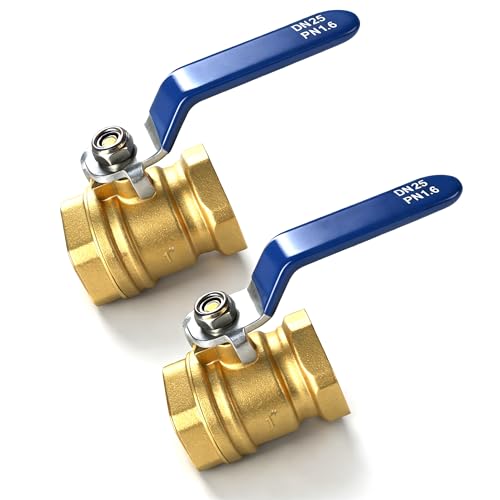
Material: Full Port Brass. Features: 1″ NPT connections with an anti-static device and a straight internal passage for low resistance. Best For: Inline shut-offs in water systems where stable, unobstructed flow matters. Why chosen: Brass construction and full-port design maintain good throughput. Limitation: Brass valves can require more torque to operate in tight spaces compared to smaller lever hands.
SKLSSVF 2Pc 304 Stainless Steel Ball Valve

Material: 304 Stainless Steel. Features: PTFE seals, high-temperature tolerance to -60 °F to 450 °F, pressure rating up to 1000 PSI. Best For: High-pressure, high-temp water, oil, or gas lines in industrial settings. Why chosen: Superior material strength and high-pressure performance make it suitable for demanding applications. Limitation: Stainless steel valves can be more expensive and heavier than brass equivalents.
Buying Guide
What size do I need: 1/2″ vs 1″ valves?
Valve sizing matches the pipe diameter. A 1/2″ valve is appropriate for smaller lines and lower flow, common in residential supply lines or branch lines. A 1″ valve supports higher flow and is typical in main lines or irrigation mains. If unsure, measure existing fittings or consult the system’s nominal pipe size.
Material matters: brass, stainless steel, or PVC?
Brass valves are widely used in residential plumbing for durability and cost. Stainless steel valves excel in harsh or high-temperature environments and where corrosion resistance is critical. PVC or CPVC valves are lighter and corrosion-resistant but are not suitable for high temperatures or certain chemical exposures. Your environment and operating conditions guide the choice.
Full port vs standard bore
Full-port (full-bore) valves provide unobstructed flow, reducing pressure drop and improving flow rates. They are preferred in systems requiring maximum throughput. Standard bore valves have a smaller internal passage and can impose minor restrictions, which may be acceptable in low-flow applications.
Locking handles and safety features
Locking handles prevent accidental valve movement in safety-critical installations. This is especially useful in industrial or outdoor settings where vibrations or mounting conditions could shift positions unexpectedly.
Installation and compatibility considerations
Match thread types (NPT, BSP, or other standards) and ensure valve connections align with existing fittings. Verify pressure ratings, operating temperature ranges, and whether your system requires a full-port design for desired performance. Flexibility in installation space can influence whether compact or larger-bodied valves are preferable.
Maintenance and longevity
Regular inspection of seals and connections helps prevent leaks. Brass and stainless steel valves are robust choices for long-term use, but valves should be selected with compatibility to fluids and ambient conditions in mind. Consider accessibility for maintenance when choosing valve placement.
Common buyer questions
- Q: Is a 1/2″ valve adequate for my bathroom fixture? A: For most residential fixtures, 1/2″ valves are suitable, but check your pipe size and required flow.
- Q: Should I choose stainless steel for outdoor irrigation? A: Yes, stainless steel offers superior corrosion resistance in outdoor environments.
- Q: What is the advantage of a full-port valve? A: It minimizes flow resistance, improving throughput in the piping system.
- Q: Do I need a locking valve? A: If the valve operates in a high-risk area or is subject to movement, locking handles reduce accidental adjustments.
- Q: How do I ensure compatibility with existing threads? A: Confirm the valve’s NPT/BSP size and threading direction to match your pipes and fittings.
- Q: Can brass valves handle hot water? A: Brass valves are suitable for typical residential hot-water systems, but confirm temperature ratings for your specific setup.
All product sections provide objective specifications and practical considerations to help buyers select the valve that best fits their needs. Use the Buying Guide questions to re-check your use-case before purchasing.