Plan your purchase around practicality and reliability. This guide focuses on calculators that help with high school and early college math and science, balancing ease of use with useful features. The top picks include scientific and basic models that suit different study needs, from portable pocket devices to desktop favorites. Best for students needing multi-line views, quick fraction handling, and reliable memory functions. Best for teachers or parents evaluating classroom-friendly options, and budget-conscious buyers seeking a solid value.
| Product | Type / Best For | Key Benefit |
|---|---|---|
| Scientific, high school math | Two-line display for entries and results | |
| Scientific, classroom, homework | Multi-line display up to four lines for comparing work | |
| Compact, everyday use | Ultra-compact and lightweight for on-the-go learning | |
| Desk work, basic math | Clear display and essential functions at a low price | |
| Exams, middle/high school | Extensive function set for SAT/standard tests |
TI-30XIIS Scientific Calculator Texas Instruments

The TI-30XIIS is a two-line scientific calculator ideal for high school math and science. It combines statistics, trigonometry, and common scientific functions with a two-line display that shows both the entry and the result, enabling quick verification. Best for students who value clear, immediate feedback during problems. A limitation is that it is non-graphing, so advanced coursework requiring graphing is better suited to other models.
Texas Instruments TI-30XS MultiView Scientific Calculator

The TI-30XS MultiView offers a four-line display to compare calculations, and it presents math expressions like textbook notation, helping students see steps clearly. It supports complex operations without requiring syntax gymnastics, making it well-suited for classroom use and homework. Choose this if you want a classroom-friendly model that minimizes confusion when viewing multiple results side-by-side. A potential drawback is the larger footprint compared with pocket models.
Casio HS-8VA Mini 6-Function Calculator

Casio’s HS-8VA is ultra-compact, making it ideal for pockets, backpacks, or small desks. It features an 8-digit display and basic memory and percentage functions, suitable for quick calculations in class or on the go. It’s best for students who want a tiny, reliable device for everyday math, but it lacks advanced scientific functionality found in higher-tier models.
Amazon Basics LCD 8-Digit Desktop Calculator
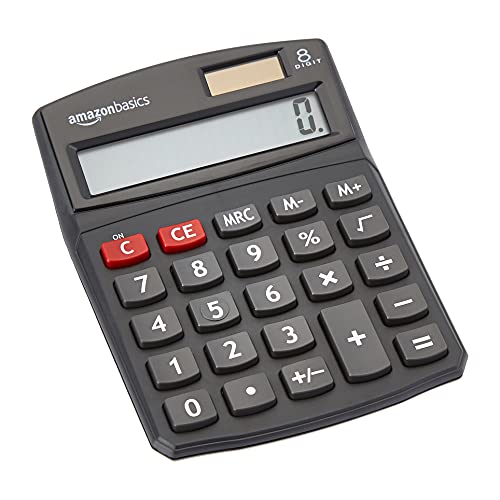
The Amazon Basics desktop calculator provides a straightforward, user-friendly experience with an 8-digit display and six functions, including basic operations and percentage. It’s well suited for students needing a dependable, budget-friendly option for daily math tasks at a desk or school workstation. Avoid this if you require advanced scientific functions or graphing capability.
RED STAR TEC SC-216 Non-Graphing Scientific Calculator

SC-216 is a non-graphing scientific calculator with extensive functions, including trigonometry, statistics with 1-2 variable calculations, and multiple angle modes. It’s designed for exams like SATs and daily school use, backed by a hard cover and a compact build. Best for students needing robust scientific capabilities without graphing. Limitation: it uses AAA batteries with a basic power setup, which may require replacements over time.
Texas Instruments TI-503 SV Standard Function Calculator
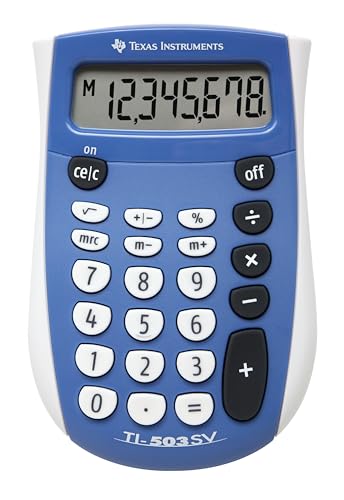
The TI-503 SV is a standard-function calculator with an 8-digit display and a large display height, plus three-key memory. It’s a straightforward option for basic arithmetic tasks and ordinary school use. Best for students who need a dependable basic calculator without advanced scientific features. Limitations include fewer scientific functions if coursework extends beyond basic math.
CATIGA Mechanical Switch Calculator
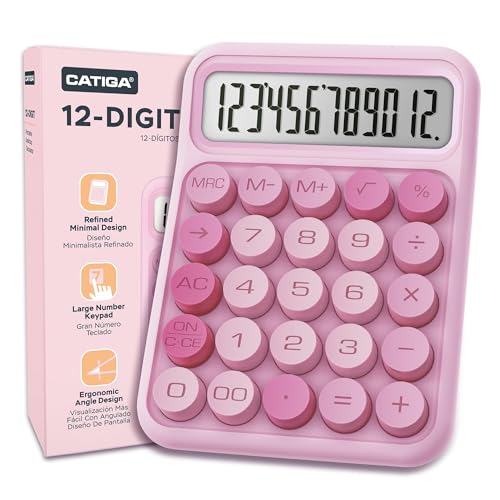
CATIGA 2847 combines a 12-digit LCD display with mechanical switch keys, offering tactile feedback and large buttons. Its energy-efficient operation includes auto-sleep after 10 minutes. Best for students who want a satisfying typing experience and clear display in a compact form. A caveat is that the design emphasizes aesthetics and may feel different from traditional classroom calculators for some users.
Buying Guide
What features matter for back-to-school use?
- Display: Choose between single-line, two-line, or multi-line displays depending on whether you need to see steps, expressions, or results at a glance. Multi-line displays help with studying and verifying work.
- Functions: Basic arithmetic vs. scientific features. For algebra, geometry, and chemistry, a scientific calculator is usually necessary.
- Size and portability: Pocket devices are convenient for classrooms, while desktop models are better for home study or tutoring sessions.
- Power: Batteries vs. solar or USB charging. Consider battery life and replacement ease, especially for students with long study sessions.
- Durability and reliability: Sturdy buttons and a robust build help withstand daily classroom use.
Which type should you choose?
- Best for general math and science homework: TI-30XIIS or TI-30XS MultiView for visibility and function range.
- Best for exams and portability: Casio HS-8VA or RED STAR TEC SC-216 with durable designs and reliable performance.
- Best on a budget: Amazon Basics 8-Digit Desktop Calculator for desk use with essential features.
Usage considerations: For coursework requiring graphing or highly specialized functions, plan to upgrade to a graphing calculator later. For most high school math and science sequences, the listed scientific calculators cover the necessary operations and notation needs.
Frequently Asked Questions
- What is the difference between a scientific and a basic calculator?
Scientific models include functions for trigonometry, statistics, and hexadecimal or fractional calculations, while basic models focus on addition, subtraction, multiplication, and division. - Do students need a graphing calculator for high school?
Not always. Many courses rely on scientific calculators. Graphing models are typically required for higher-level math or advanced science classes. - Is a pocket calculator better than a desktop model for school?
Pocket models are highly portable and convenient for class work, while desktop models offer larger displays and easier viewing at home. - How important is display clarity?
Clear, legible displays reduce errors and speed up problem solving, especially when comparing steps side by side. - Should I prioritize memory functions?
Yes, memory features help with long calculations and repetitive steps, which is useful for algebra and chemistry problems.