When selecting bait casting fishing line, the choice boils down to line strength, abrasion resistance, visibility, and memory. This guide highlights top options suited to different fishing styles—saltwater and freshwater—along with who each product is best for. Use the table below to compare key specs at a glance.
| Product | Line Type | Best For | Notable Feature |
|---|---|---|---|
| Reaction Tackle Braided Line | Braid | Power anglers targeting big fish near structure | High abrasion resistance, colorfast |
| Berkley Trilene XL Monofilament | Mono | Freshwater finesse and versatile setups | Smooth casting, manageable twists |
| SpiderWire Stealth Braided Line | Braid | Big-water or heavy cover, salt or freshwater | Dyneema fiber, thin diameter |
| KastKing Superpower Braided Line | Braid | Strong knots and abrasion in tough cover | Low memory, easy for solid knots |
| Zebco Cajun Smooth Cast Monofilament | Mono | Inexpensive setups, general casting | Invisibility in water, smooth cast |
Reaction Tackle Braided Fishing Line — Pro Grade Power
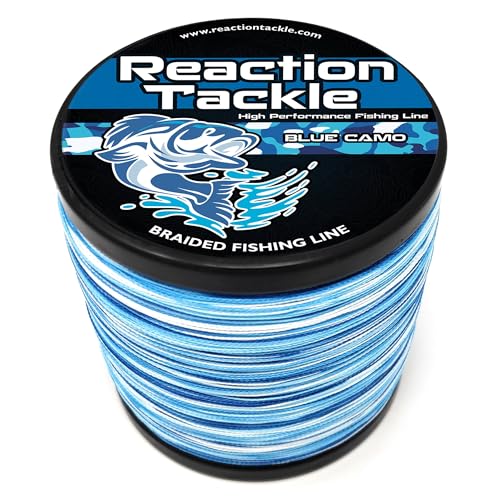
Type: Braided line engineered from ultra high molecular weight polyethylene. Strength: designed to be super tough for both saltwater and freshwater. Color: blue camouflage for extra visibility. Length: 150 yards, with 20 lb test. Best For: anglers who need a robust braid that resists abrasion and stays visible in water, especially in rough structure or heavy cover. Why this selection: high abrasion resistance and colorfast technology help visibility and durability in challenging fishing environments. Limitation: color visibility can make it more noticeable in clear water, which may impact presentation in ultra-clear streams.
Berkley Trilene XL Clear Monofilament, 8 lb
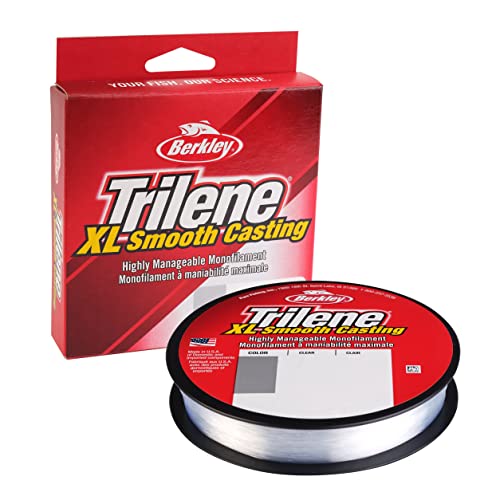
Type: Monofilament line, clear visibility. Strength: 8 lb test, total length 330 yards. Best For: freshwaters, versatile bait setups, and beginners seeking smooth, easy casting. Why this selection: Trilene XL offers dependable manageability with minimal twists and knots, helping anglers place baits precisely. Limitation: being monofilament, it may have higher stretch than braided options, which can affect sensitivity and hook sets in some scenarios.
SpiderWire Stealth Braided Line — Moss Green

Type: Braided line using Dyneema fibers for strength with a thin diameter. Strength: 10 lb test, length 200 yards. Best For: heavy cover, saltwater or freshwater, where abrasion resistance and stealth are important. Why this selection: the thin diameter with high strength improves casting performance and reduces line visibility underwater. Limitation: braided lines can be more prone to wind knots if not managed properly in certain setups.
KastKing Destron Braided Line — Grass Green

Type: Braided line with MultiTuf fiber construction for high tensile strength. Strength: lightweight yet strong with 150 yards available. Best For: anglers who demand extreme sensitivity and knot strength, especially in tough conditions. Why this selection: Deeply engineered fiber process yields zero stretch and excellent sensitivity, helpful for detecting light bites. Limitation: may require maintenance to prevent tangles and wind knots in certain reels and setups.
Beyond Braid Blue Wave — 20lb, 300 Yards

Type: Braided line with fluoropolymer coating for smoother casting. Strength: 20 lb test, 300 yards. Best For: long casts and heavy cover situations where line durability and distance matter. Why this selection: fluoropolymer coating reduces friction, enabling longer casts and improved line management. Limitation: coated braids can feel stiffer in colder water or when stored for long periods.
KastKing Destron Braided Line — Grass Green
Note: The Destron line is designed for strength and sensitivity with a modern MultiTuf fiber blend. Best For: anglers who require a high-strength line with thin diameter for more line capacity and sharper hook sets. Why this selection: the advanced fiber processing increases tensile strength and knot security. Limitation: higher performance line may demand careful line handling to avoid wind knots in certain reels.
Buying Guide: What To Consider When Choosing Bait Casting Line
Line type: Braided lines offer high strength, minimal stretch, and thin diameters for longer casts, but they can be more visible and require proper knot choices. Monofilament lines are forgiving, easy to manage, and affordable but tend to stretch and have more memory. Fluorocarbon-coated braids can reduce visibility while maintaining strength and distance. Reels and rod compatibility also influence line choice; match line diameter to rod guides to prevent friction and casting issues.
Line strength vs. diameter: Higher pound tests do not always mean better performance. A thinner braid at a given strength can provide more power with less line on the reel, while a thicker mono may be easier to cast for beginners. Knot strength matters; some braided lines require specific knot types to avoid slippage. Consider your target species and environment when evaluating line selection.
Visibility and color: Colored lines can aid visibility for anglers but may affect bite presentation in clear water. Some lines include colorfast technology to resist fading. In murky water, brighter lines can help detect bites; in clear water, consider low-visibility options or clear monofilament or fluorocarbon lines.
Abrasion resistance: Lines used around rocks, logs, or heavy cover should emphasize abrasion resistance. Braids generally excel here, but coatings and line construction can further improve durability. Always inspect line for wear after sessions in structure-heavy environments.
Tackling choice by scenario: For saltwater heavy cover, braided lines with high strength and abrasion resistance are common. For finesse freshwater applications, monofilament or fluorocarbon lines with good manageability and low memory can be advantageous. In multi-environment setups, consider a braided mainline with a fluorocarbon leader for stealth and control.
Frequently Asked Questions
- What line is best for baitcasting big fish? – Braided lines with high strength and abrasion resistance are commonly favored for big fish and heavy cover due to their strength and thin diameter.
- Should I use monofilament or braided line for beginners? – Monofilament is typically easier for beginners due to forgiving memory and knots, though braided lines can be learned with proper knot choices.
- Do braided lines require special knots? – Yes, certain knots work better with braid (e.g., Palomar, Uni Knot) and some require a knot-clip or sleeve to prevent slippage.
- Can color help with visibility without scaring fish? – Yes, color choices affect visibility. Some lines use colorfast technology to maintain visibility for you without scaring fish in many environments.
- What is memory in fishing line? – Memory is how much a line remembers its coiled shape. Low memory lines stay straighter, improving casting distance and accuracy.
- Is a leader recommended with braided line? – A fluorocarbon or monofilament leader is often recommended with braid to improve casting distance and reduce line visibility near the bait.