When selecting a caution low headroom sign, choose durable materials with clear visibility for both indoor and outdoor use. This guide highlights five strong options suited for warehouses, loading docks, and facilities with overhead clearance risks. Each sign targets specific environments and audiences, from indoor offices to outdoor parking areas, helping prevent clearance incidents.
Buyer’s quick reference:
| Product | Material | Size | Best For |
|---|---|---|---|
| NMC C43R OSHA Sign | Rigid Plastic | 10″ x 7″ | Indoor/outdoor use, high chemical resistance |
| SmartSign Low Headroom Aluminum (7×10) | Aluminum with 3M Reflective Film | 7″ x 10″ | Outdoor visibility, DOT-compliant |
| SmartSign Low Headroom Plastic (7×10) | HDPE Plastic | 7″ x 10″ | Short outdoor durability, recyclable |
| SmartSign Low Headroom Vinyl Label (5×10) | Vinyl, Laminated | 5″ x 10″ | Temporary or movable signage |
| SmartSign Low Headroom Aluminum (7×10) | Aluminum | 7″ x 10″ | Long outdoor life, fade resistance |
NMC C43R OSHA Sign — Caution Low Headroom
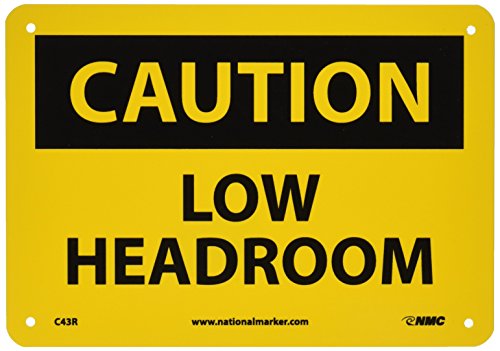
NMC’s C43R sign communicates “CAUTION – LOW HEADROOM” with bold black-on-yellow lettering. Constructed from rigid plastic, it is designed for indoor and outdoor environments, offering good chemical resistance. This sign is best for facilities needing a durable, lightweight option with clear visibility where overhead clearance is a concern. Use this when a straightforward, low-cost sign is preferred for temporary or semi-permanent installations.
Best for facilities prioritizing chemical resistance and a simple, economical sign for indoor or protected outdoor areas.
Limitation: Plastic signs may wear faster than metal in harsh outdoor conditions or heavy abrasion areas.
SmartSign Low Headroom Sign — 7×10 Aluminum Reflective

SmartSign’s 7″ x 10″ aluminum sign uses 3M reflective film and durable, rustproof aluminum to meet outdoor visibility needs. It is designed for nighttime visibility and long outdoor durability, making it ideal for parking lots and loading zones. This option is best for readers who require DOT-compliant outdoor signage with enhanced reflectivity.
Best for outdoor visibility and long-term outdoor use in parking or traffic-related settings.
Limitation: Higher cost compared to plastic or vinyl alternatives.
SmartSign Low Headroom Sign — 7×10 Plastic

This 7″ x 10″ plastic sign uses 55 mil HDPE with rounded corners for safety and professional appearance. It is durable for outdoor use up to two years and is fully recyclable. Suitable for temporary or budget installations in warehouses or maintenance areas where quick replacement is expected.
Best for budget-conscious installations where short-to-medium outdoor durability is acceptable.
Limitation: Not as long-lasting as metal signs in extreme weather or high-traffic outdoor spots.
SmartSign Low Headroom Aluminum — 7×10

Made from 40 mil aluminum, this sign resists rust and lasts up to seven years outdoors. It features rounded corners for safe handling and is laminated to protect graphics from weather and graffiti. Choose this when outdoor longevity and a clean, professional look are priorities.
Best for long-term outdoor use in busy facilities requiring durable, corrosion-resistant signage.
Limitation: Higher upfront cost than some plastic or vinyl options.
SmartSign Bilingual Low Headroom Sign — 10×14 Aluminum

This 10″ x 14″ aluminum sign includes a bilingual “Caution – Low Headroom” message. Its heavy-duty aluminum construction, rounded corners, and laminated surface provide seven-year outdoor durability and resistance to weather and vandalism. It is well-suited for facilities with multilingual staff or visitors.
Best for multilingual environments needing a clear, durable message visible at a distance.
Limitation: Larger size may be less suitable for tight spaces or small indoor areas.
Caution Low Headroom With Graphic Sign — Sigo Signs

Made from durable 4 mil vinyl, this graphic decal is weather resistant and designed for outdoor and indoor applications. UV-resistant inks help preserve legibility over time. It is ideal for temporary or location-specific warnings where adhesive decals are preferred.
Best for decals and smaller warning graphics that need easy application and removal.
Limitation: Not a rigid sign; may not be suitable where a rigid sign is required for visibility or mounting.
Buying Guide
What material should I choose?
- Aluminum signs offer long outdoor life and rust resistance; best for exterior installations and high-traffic areas.
- Plastic and HDPE signs are lighter and economical; suitable for indoor use or short-term outdoor needs.
- Vinyl decals are flexible and easy to apply; ideal for temporary warnings or irregular surfaces.
What size is most effective?
- 7″ x 10″ and 10″ x 14″ signs balance visibility with space constraints in most warehouses and parking areas.
How important is reflectivity?
- Reflective films improve nighttime visibility; choose reflective aluminum when the area is poorly lit or vehicle traffic is present.
What should I consider for installation?
- Rugged environments may require laminated, weather-protected signs to resist graffiti and moisture.
- Rounded corners reduce handling injuries and wear; prefer signs with burr-free edges.
How long should signs last?
- Outdoor longevity ranges from 2 years (HDPE plastic) to 7 years (aluminum) depending on material and exposure.
Frequently Asked Questions
- What does “low headroom” refer to?
- Are reflective signs required by regulations for outdoor spaces?
- Can I use a bilingual sign for multilingual facilities?
- Is laminated signage more durable than unlaminated?
- Should I choose vinyl decals over rigid signs?
- What height should signage be placed at?
It indicates areas with overhead clearance restrictions where taller vehicles may contact overhead structures.
Reflectivity helps with night visibility, which is often recommended for outdoor signage, though regulatory requirements vary by jurisdiction.
Yes, bilingual signs improve comprehension for diverse staff and visitors and are suitable for wide spaces or entry points.
Laminate extends weather resistance and graffiti cleaning capability, generally increasing durability in outdoor settings.
Vinyl decals are ideal for temporary warnings or uneven surfaces, while rigid signs provide clearer readability and stability in harsh environments.
Place signs where they are clearly visible to approaching drivers and pedestrians, typically near eye level for the intended audience and just before the overhead clearance risk.