Finding the right closed cell neoprene foam sheet depends on project needs like sealing, vibration damping, or moisture resistance. This guide highlights five options suited for DIY gaskets, insulation, padding, and anti-slip applications. Each pick is explained for who it’s best for, with practical trade-offs to help you compare quickly.
| Product | Best For | Key Benefit |
|---|---|---|
| AMGSH 1/8″ Thick Neoprene Foam Sheet | DIY gasket makers and cushions | No adhesive; flexible and oil-resistant |
| Storystore Foam Rubber Sheet With Adhesive (12 x 59 x 1/4″) | Mounted padding and anti-slip seals | Adhesive backing for quick installation |
| LSGCQ Foam Padding Sheets With Adhesive (12″ x 1/16″ x 59″) | Foam gaskets and lining | High-density neoprene with strong peel-and-stick backing |
| Storystore 5 Pcs 1/8″ Thick Foam Padding Sheets | Multi-project padding and anti-vibration | Five pieces for versatile DIY projects |
| XCEL Marine Foam Roll With Self Adhesive (60″ x 16″ x 1/2″) | Marine, automotive, and cosplay padding | Self-adhesive, durable, buoyant closed-cell foam |
All selected options are closed-cell neoprene or neoprene blends designed for cushioning, sealing, and vibration control. The list balances non-adhesive sheets, adhesive-backed pads, and larger rolls to cover workshop and field needs alike.
AMGSH 1/8″ Neoprene Foam Sheet

Best for: hobbyists and DIYers who need a flexible, oil-resistant sheet that can be cut into custom gaskets or seals. Why selected: This sheet offers a smooth finish and durability in a wide temperature range (-150℃ to 50℃) without adhesive complicating your first cuts. Caution: Without adhesive, mounting requires separate bonding methods for secure seals.
Storystore Adhesive Foam Sheet 12 x 59 x 1/4 Inch

Best for: projects needing quick, secure installation on flat surfaces. Why selected: The built-in adhesive backing simplifies mounting on machinery, panels, or cabinetry. Caution: Adhesive backing may leave residue if removed and reapplied, so plan placement carefully.
LSGCQ Sponge Neoprene Foam With Adhesive (12″ x 1/16″ x 59″)

Best for: thin-gasket applications where a discreet seal is needed without bulk. Why selected: High-density neoprene provides good sealing and oil resistance with an effective peel-and-stick backing. Caution: Thinner profiles may have less compressive resilience for high-load gaps.
Storystore 5 Pcs 1/8″ Thick Foam Padding Sheets
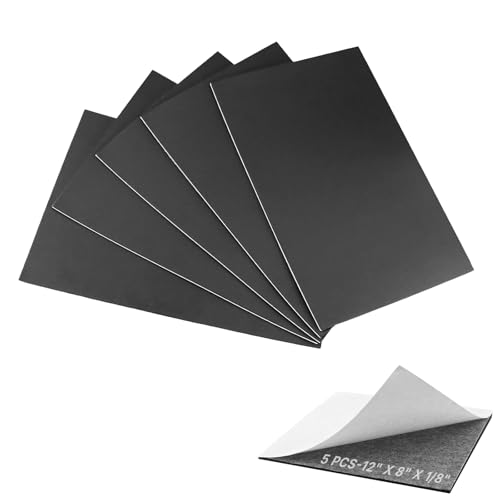
Best for: multi-project kits where several mounting pads are needed. Why selected: The five-piece set provides consistent thickness (1/8″) with adhesive backing, suitable for vibration damping and anti-slip uses around appliances or electronics. Caution: Avoid re-sticking pads multiple times to prevent reduced adhesion strength.
XCEL Marine Foam Roll With Self Adhesive

Best for: marine, automotive, and cosplay padding where buoyancy and moisture resistance matter. Why selected: A self-adhesive, closed-cell foam roll that cuts to fit and adheres firmly, offering flexibility for contouring curved surfaces. Caution: Rolls may require edge finishing to prevent peel in high-stress areas.
Buying Guide
When choosing a closed cell neoprene foam sheet, consider these factors:
- Adhesion vs. non-adhesive: Do you need a quick peel-and-stick solution, or will you bond with other adhesives?
- Thickness and density: Thicker sheets offer better cushioning but may be harder to trim precisely; thinner sheets seal tighter in tight gaps.
- Environmental exposure: For oil, water, or extreme temperatures, confirm the foam’s resistance specs.
- Size and shape: Rolls and large sheets enable custom cuts; smaller pads suit ready-to-use installations.
- Applications: Gaskets, anti-slip, vibration damping, insulation, and weather sealing each benefit from different densities and adhesion levels.
FAQ
- What is closed cell neoprene foam best used for? It’s great for gaskets, seals, vibration dampening, and moisture-resistant padding.
- Are adhesive-backed sheets easier to install? Yes, they simplify mounting on flat surfaces and reduce handling steps.
- Can I cut neoprene foam easily? Yes, it cuts with utility knives or scissors; use a straight edge for clean lines.
- Will neoprene degrade in oil or solvents? High-quality neoprene resists many oils, but check product specs for your environment.
- Do thicker sheets provide more cushioning? Generally, yes, but consider space constraints and the seal contact area.
- Is it safe for indoor use? Most neoprene sheets are designed for indoor and outdoor use, but confirm any odor or material safety data for your project.