When concrete, mortar, or cement buildup appears on tools, surfaces, or machinery, a dedicated dissolver can save time and effort. This guide highlights five reliable products ideal for American homeowners and professionals seeking safe, effective cleanup without harsh fumes or heavy scrubbing. Each option targets different needs—from spray-on convenience to bulk removal—so you can choose the right fit for your project and workspace.
Buyer-friendly overview table of chosen products:
| Product | Best For | Key Benefit | Approx. Size |
|---|---|---|---|
| Sakrete Concrete & Mortar Dissolver | General cleanup on tools and surfaces | Biodegradable, non-fuming | 28 oz |
| Legion Chemicals 1-Quart Spray Heavy Concrete Remover | Heavy buildup and safe, muratic-strength action | Spray-on convenience, no fumes | 1 quart |
| Tenon Concrete & Masonry Dissolver | Quick, no-acid dissolving | Fast acting, non-corrosive | 1 gallon |
| Tenon Concrete & Masonry Dissolver (28 oz) | Smaller cleanup jobs | Fast acting, no acids | 28 oz |
| Cleen Products Super Concrete Dissolver | Tools, mixers, and equipment | Biodegradable and non-corrosive | 22 oz foam spray |
Sakrete Concrete & Mortar Dissolver — 28 oz

What it is best for: Cleaning dried concrete or mortar from tools and other surfaces. The formula is non-hazardous, non-fuming, and 100% biodegradable, which makes it suitable for indoor use and spaces with limited ventilation. It’s a solid choice for DIYers and small contractors who want a safer cleanup option without compromising effectiveness.
Why it was selected: This dissolver emphasizes safety and environmental friendliness while performing standard cleanup tasks. It provides a practical option when the goal is to avoid strong fumes and chemical burn risks. Best for routine maintenance and light to moderate buildup.
Caution: While effective on dried residues, extremely thick or deeply adhered buildup may require longer dwell times or mechanical assistance.
Legion Chemicals 1-Quart Spray Heavy Concrete Remover

What it is best for: Large or stubborn concrete buildup where spray-on convenience matters. The Gen2 formula claims to melt concrete into a rinse-off slurry, reducing the need for scrubbing. It’s described as muratic-strength without fumes, making it appealing for surfaces that could be damaged by harsher acids.
Why it was selected: This option balances powerful activity with safer usage characteristics. It’s suited for workshop floors, vehicles, and machinery where heavy deposits exist but ventilation may be limited. It’s a good “best for” when you need fast action with less manual effort.
Limitation: The product description notes strong action; care should be taken around painted surfaces or delicate metal finishes to prevent unintended staining or etching.
Tenon Concrete & Masonry Dissolver, 1 Gallon
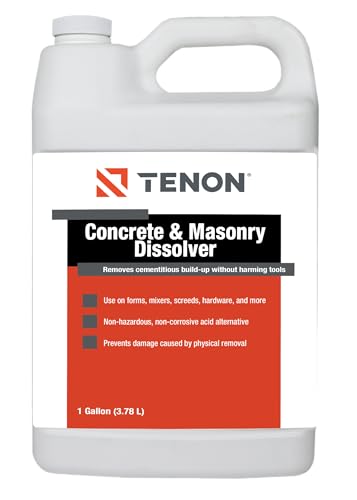
What it is best for: Quick removal with fast action. The product highlights non-harmful acids, non-corrosive properties, and “fast acting” performance with results in 30 minutes or less. Suitable for heavier buildup on concrete forms or masonry joints without resorting to brute force.
Why it was selected: The gallon size provides cost-effective bulk cleanup for larger projects. It’s a practical choice when daily or recurring use is expected in a workshop or job site. Choose this if you routinely encounter significant concrete residues and want a reliable, quick-response dissolver.
Caution: Although described as non-corrosive, avoid direct contact with skin and follow label directions for ventilation and application on sensitive surfaces.
Tenon Concrete & Masonry Dissolver, 28 Ounces

What it is best for: Smaller cleanup tasks where a compact bottle is preferable. It shares the same non-acidic, fast-acting characteristics as the gallon version, with immediate starts and 30-minute results.
Why it was selected: This product offers a convenient, easy-to-store option for occasional use or tight job sites. It’s ideal for contractors who need a ready-to-use bottle for on-the-go applications. Better for quick touch-ups or isolated tool cleaning.
Limitation: Smaller size may require more frequent replacements for extensive projects, potentially increasing the number of bottles needed over time.
Cleen Products Super Concrete Dissolver — 22 oz Foam Spray
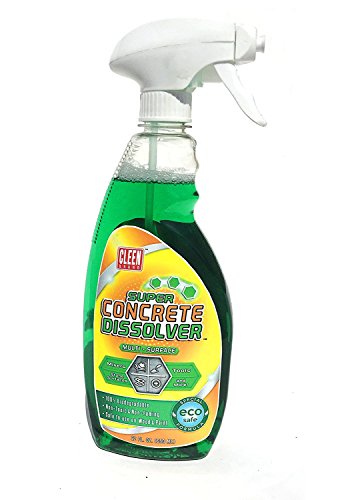
What it is best for: Quick, spray-on cleaning of tools, mixers, and equipment. The foam spray format helps cover irregular surfaces and reach crevices where dried concrete tends to cling.
Why it was selected: The product emphasizes biodegradability and non-corrosiveness, aligning with safer household or small shop use. It’s useful for batch cleaning without heavy gloves or heat.
Limitation: Foam sprays can be less effective on very thick deposits; longer dwell times may be needed for stubborn material.
Buying Guide: How to Choose the Right Dissolver
What form of dissolution suits your workflow? Consider these practical questions when buying concrete and mortar dissolvers.
- What is the buildup’s size and thickness? For light to moderate residue, a spray or foam dissolver is usually sufficient. For heavy layers, a larger gallon size may be more cost-effective.
- Do you need a low-odor or non-fuming option? If you work indoors or in confined spaces, prioritize non-fuming formulas and biodegradable options.
- Is surface safety a priority? Choose products marketed as non-corrosive or safe for paint and metal when you’re cleaning machinery or vehicles.
- What is your preferred application method? Spray bottles and foam sprays offer quick coverage, while gels or liquids may require brushing for best contact.
- How quickly do you need results? Some products advertise 30-minute or faster results, which helps with workflow and time management on commercial jobs.
FAQ
- What is a concrete dissolver used for?
– They dissolve dried concrete, mortar, or cement residues on tools, surfaces, and equipment to avoid chiseling and extensive scrubbing. - Are these products safe for indoor use?
– Many are non-hazardous and non-fuming, with biodegradable formulations designed for safer indoor cleanup. Always follow the label directions for ventilation and application on sensitive materials. - Can these dissolvers damage paint or metal?
– Some formulations are described as safe for paint and metal, but always test on a small area first and limit dwell time to prevent unintended damage. - Which size should I buy for frequent use?
– For frequent or large projects, consider the gallon-size option for cost efficiency; for occasional cleaning, 28 oz or 1 quart bottles are convenient. - Do these products require any safety gear?
– Generally, basic gloves and eye protection are recommended, depending on the product’s strength and your workspace conditions.