Answering the common buyer question: foam sponge filters are best for small to medium tanks that need gentle, efficient mechanical and biological filtration. These options suit beginner aquarists, fry keepers, nano-tank enthusiasts, and anyone who wants easy maintenance with reliable filtration. Below, five top foam filter options are compared, highlighting who they are best for and why they stand out.
| Product | Best For | Key Benefit |
|---|---|---|
| ALEGI Aquarium Sponge Filter Pad (20″x20″x1″, 20 PPI) | Tanks needing strong mechanical filtration | High-density sponge captures impurities effectively |
| AQUANEAT 3 Pack Aquarium Bio Sponge Filter | Small to nano tanks, breeding fry | Combo of mechanical and bio filtration |
| Pawfly 3 Pack Aquarium Sponge Filter (Tiny tanks) | Betta and shrimp setups up to 10 gallons | Compact size with easy maintenance |
| Pawfly 4 Pack Aquarium Bio Sponge Filter Pads | Pre-filter and versatile uses | Cut-to-fit options for various filters |
| ALEGI Aquarium Sponge Filter Pad (20″x20″x1″ 35PPI) | Tanks needing denser filtration | Higher pore density for refined filtration |
ALEGI Aquarium Sponge Filter Pad, 20″x20″x1″ (20 PPI)

Best for aquariums where strong mechanical filtration is needed. The high-density sponge effectively captures suspended particles and waste, helping maintain water clarity and a stable environment for aquatic life. Made from premium sponge material to resist deformation and extend filtration life. Easy installation allows you to cut to the exact size for a snug fit in your filtration system.
- Best for hobbyists seeking reliable mechanical filtration in mid-sized tanks.
- Better for long-term use due to durable material and stable performance.
Caution: Ensure the sponge width and height fit your filter housing to avoid bypass. Cut to size with clean scissors for a proper seal.
ALEGI Aquarium Sponge Filter Pad (20″x20″x1″, 35PPI)

Chosen for tanks that require finer filtration. The 35PPI structure offers denser filtration, trapping smaller debris while supporting beneficial bacterial growth. Suitable for cut-to-fit applications, enabling a precise fit in various filter systems. Ideal for users who want improved clarity and stability in community tanks or fry habitats.
- Choose this if you want finer filtration than standard 20 PPI pads.
- Avoid if your filter casing cannot accommodate the cut-to-fit approach.
AQUANEAT 3 Pack Bio Sponge Filter (Small up to 10 Gal)

This option is well-suited for small tanks or breeding setups. It provides both mechanical and bio filtration, plus an air infusion chamber that increases dissolved oxygen. The soft sponge is safe around fish, and the design supports easy setup and periodic cleaning by rinsing the sponge in tank water.
- Best for small tanks, fry care, or nano aquariums needing gentle filtration.
- Better for users who want dual filtration with oxygenation benefits.
Pawfly 3 Pack Aquarium Sponge Filter (Small Tanks)

Best for Betta and small community tanks up to 10 gallons. These compact filters offer fine sponge filtration with a focus on not sucking up fry. They are easy to install, and each unit can be detached for cleaning by rinsing in tank water every few weeks.
- Choose this if you maintain a small tank or have fry that require gentle filtration.
- Avoid if you need a larger flow or higher filtration capacity.
Pawfly Large Bio Sponge Filter (Up To 60 Gallon)

Best for larger setups needing robust filtration without disturbing the inhabitants. This larger unit provides strong mechanical and bio filtration, and is designed for tanks up to 60 gallons. Easy cleaning and disassembly aid ongoing maintenance, though it requires a suitable air pump to operate.
- Choose this for medium to large planted tanks or community tanks with many fish.
- Avoid if you lack space for the unit or a compatible air pump.
AQQA Aquarium Sponge Filter Submersible (5-20 Gallon)
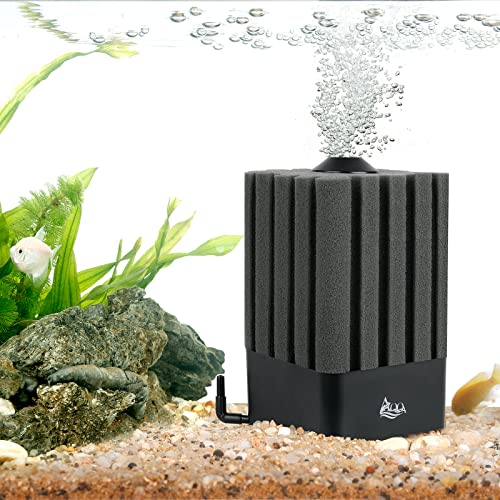
Best for quiet operation in small tanks where noise needs to be minimized. This ultra-quiet, air-powered filter provides mechanical filtration along with a biological component via ceramic media balls. Replaceable sponge and media offer flexibility for ongoing tank management. Requires an appropriate air pump and hose (not included).
- Choose this to minimize disturbance in quiet rooms or bedrooms.
- Limitations: Requires an external air pump; included components do not include the pump or hose.
Buying Guide: Foam Filter For Your Aquarium
What tank size and fish load should guide your choice? Foam filters come in varied densities (PPI) and sizes. Higher PPI yields finer filtration but can reduce flow. Consider whether you want mechanical-only filtration or a combined mechanical and biological approach with media like ceramic beads. Cut-to-fit options help adapt standard sponges to many filter housings. Replacement and cleaning ease matter for ongoing maintenance.
- Tank size and fish type: Smaller tanks with fry or delicate species benefit from gentle, bio-friendly filtration. Larger tanks may require bigger units or multiple pads.
- Filtration goals: Mechanical filtration removes debris; biological filtration supports nitrifying bacteria. Some products include bio media for immediate biological filtration.
- Maintenance: Look for sponges that rinse clean in tank water and don’t degrade quickly. Ensure you can access and replace media easily.
- Compatibility: Verify the filter’s inlet size, the need for an air pump, and whether the sponge pad can be cut to fit your filter cabinet.
- Placement and noise: Submersible and air-powered options vary in noise; consider a model that fits your room’s tolerance for sound.
Frequently Asked Questions
- Q: Do foam filters replace sponge filters in canister systems? A: They work well as pre-filters or in small setups; match size and flow to your filter’s intake.
- Q: How often should sponge filters be cleaned? A: Rinse in tank water every 2–4 weeks or as needed to avoid removing beneficial bacteria.
- Q: Can foam filters be cut to fit odd-shaped filter bodies? A: Yes. Use sharp scissors to resize while maintaining edge integrity.
- Q: Are foam filters safe for fry and shrimp? A: Yes, especially soft sponge varieties that prevent accidental suction of small creatures.
- Q: Do these sponges provide both mechanical and biological filtration? A: Many do; some models pair sponges with bio media for enhanced biological filtration.
- Q: Is an air pump required for all foam sponge filters? A: Some models are air-powered and require a pump; others include integrated setups or rely on water flow.