If you need a food-grade hydraulic oil ISO 32, you’re seeking lubricants that meet strict safety standards for incidental contact with food. This guide highlights five top options and explains who each product is best for, along with practical buying considerations. These selections prioritize NSF/H1 approval, kosher and halal certifications, oxidation resistance, and long fluid life—key factors for minimizing downtime in demanding environments. Each option is suited to different equipment types and maintenance needs, from small industrial systems to large-scale, high-temperature operations.
| Product (Selected) | Best For |
|---|---|
| Food Grade Hydraulic Oil 32 – Fully Synthetic Blend (Elba) | High-temperature operations with stringent purity standards |
| Food Grade Hydraulic Oil 32 – Industrial (Elba) | Valves and actuators requiring robust long-life performance |
| ELBA Food Grade Hydraulic Oil 32 – 55 Gallon | Large systems needing cost-effective, extended maintenance intervals |
| Petrochem Synthetic Hydraulic Oil – 1 Gal ISO 32 | Auto & truck maintenance or mixed-vehicle fleets |
| BioFlo 32/46 Food Grade Hydraulic Oil (BioBlend) | Biodegradable option with non-toxic formulation |
Food Grade Hydraulic Oil 32 – Fully Synthetic Blend (Elba)

Best for high-purity environments, this NSF-registered and HALAL/KOSHER-certified oil is a fully synthetic blend designed to extend fluid life and reduce downtime in tough operating conditions. It’s ISO VG 32 and suitable for systems that require precise viscosity control without compromising safety. This option is ideal for facilities with strict dietary-use guidelines or where certification is a priority.
Who it’s best for: plants needing a high-purity, versatile 32-grade oil with strong approvals. Why selected: robust certifications and a synthetic blend offer longevity in challenging environments. Caution: ensure compatibility with existing seals and elastomers before switching.
Food Grade Hydraulic Oil 32 – Industrial (Elba)
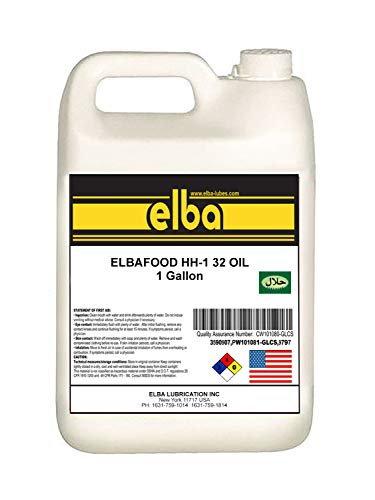
This industrial-grade option emphasizes resistance to oxidative breakdown at high temperatures and smooth operation of hydraulic valves and actuators. It’s NSF H-1 food-grade and Kosher/Halal approved, making it well-suited for manufacturing or processing lines where temperature variance is common. It aims to provide longer fluid life with reduced downtime in demanding environments.
Who it’s best for: factories with high-temperature cycles and frequent valve actuation. Why selected: strong oxidation resistance supports reliability. Caution: certain systems may require a different viscosity grade for peak efficiency in cooler conditions.
ELBA Food Grade Hydraulic Oil 32 – 55 Gallon

A large-volume fully synthetic option intended for bulk use in industrial settings. It meets H1 requirements and is Kosher/Halal approved. This product is designed to keep systems free of sludge and varnish while resisting oxidative breakdown. Best for cost-conscious operations with high-volume needs and long-run intervals.
Who it’s best for: facilities purchasing in bulk with complex hydraulic networks. Why selected: cost efficiency through larger containers. Caution: ensure proper handling and storage for a 55-gallon drum to prevent contamination.
Petrochem Synthetic Hydraulic Oil, ISO 32

Designed for auto and truck maintenance contexts, this ISO 32 hydraulic oil from Petrochem provides a dependable option for mixed fleets or vehicle-related hydraulic systems. It emphasizes reliability for automotive-centric hydraulic applications and is USA-manufactured, lending familiarity to domestic maintenance programs.
Who it’s best for: mixed automotive-hydraulic systems and fleet operations. Why selected: straightforward option for vehicle-related hydraulic tasks. Caution: not the best choice for facilities requiring non-detergent or very low-temperature performance.
ELBA Food Grade Hydraulic Oil 32 – Fully Synthetic Blend (55 Gallon)

An all-purpose, fully synthetic 32-grade oil designed to support clean operation in food-processing environments. It’s H1-compliant for incidental contact and is built to reduce sludge and varnish formation while maintaining valve and actuator performance under oxidative stress. Best for large systems needing a dependable, certified bulk option.
Who it’s best for: large facilities with extensive hydraulic circuits and premium cleanliness requirements. Why selected: combines bulk practicality with strong safety certifications. Caution: ensure proper storage and ventilation for bulk containers to prevent contamination or degradation.
Buying Guide: Key Purchase Considerations
- Certifications and safety: Prioritize NSF/H1 registration, as well as kosher and halal approvals if required by your facility’s policies. These indicate suitability for incidental food contact and safety compliance.
- ISO viscosity grade: For most equipment using ISO VG 32, confirm compatibility with seals, gaskets, and pump tolerances. Higher or lower grades may affect system performance.
- Oxidation resistance and temperature range: Choose products designed to resist breakdown at your operating temperatures to minimize varnish and sludge formation.
- Bulk vs. small containers: Large facilities may benefit from 55-gallon drums or bulk pails for cost efficiency, while smaller operations may prefer quarts or gallons for easier handling and inventory control.
- Food-safety strategy: If your process allows incidental contact with food, a product with explicit FDA/FDA 21 CFR alignment and H1 status reduces compliance risk.
- Application scope: Some formulations emphasize smoother valve actuation, others prioritize longer fluid life. Match the product’s strengths to your equipment’s needs.
- Storage and handling: Ensure proper storage conditions to prevent contamination, moisture ingress, or temperature-related degradation in bulk containers.
FAQ
- What is food-grade hydraulic oil ISO 32 used for? It provides lubricity for hydraulic systems with safety standards for incidental food contact, suitable for processing facilities and equipment that operate in or around food.
- Why are there different ELBA products in this guide? Different container sizes and performance focuses help facilities choose based on volume needs and maintenance intervals.
- What does H1 certification mean? H1 indicates the lubricant is suitable for incidental food contact and complies with safety standards for food-processing environments.
- Is biodegradability important for hydraulic oil? For some facilities, BioFlo 32/46 offers biodegradable options; assess environmental goals and waste-handling requirements.
- How do I know which viscosity to choose? Check your equipment’s specification sheet; incorrect viscosity can cause wear, inefficiency, or improper valve operation.
- Can I switch to a food-grade oil from a non-food-grade oil? Switching requires confirming compatibility with seals and the system’s metal surfaces; consult the equipment manufacturer if needed.