This guide helps buyers choose the right gun-grade expanding foam applicators for sealing gaps, cracks, and joints. It highlights five top options suited to DIY projects and professional jobs alike. Each product is best for specific uses such as precision decorating, large-area sealing, or hard-to-reach spots. Below, find clear, objective details to compare suitability, control, and ease of use.
| Product | Best For |
|---|---|
| Picowe Foaming Gun | Balanced performance for general home projects; ergonomic for long use |
| Luft Professional Expanding Foam Gun (1 Pack) | Precise control and low waste for mid-sized jobs |
| AWF PRO High Precision Spray Foam Gun | Professional-grade with adjustable flow for exact amounts |
| Wolline Professional Foam Gun | Hard-to-reach gaps with extension accessories |
| Preciva Foam Gun | Easy cleaning and reliable control for frequent use |
Picowe Foaming Gun For Durable Home Applications
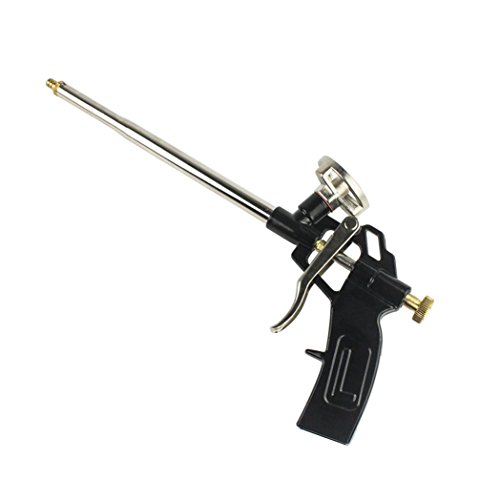
Best for: Homeowners working on balcony doors, windows, and medium-size gaps. The gun uses an aluminum body for robustness, with a spring trigger to control foam flow. It minimizes post-dispensing drips and is designed to reduce foam waste. The ergonomic handle supports longer use without fatigue.
Limitations: The information notes high expansion with small shrinkage, but actual performance depends on canister compatibility and project conditions. Not ideal for extremely tight or oversized cavities without proper nozzle choice.
Luft Professional Expanding Foam Gun (1 Pack)

Best for: Professionals and serious DIYers needing precise control and reduced waste. Features a copper nozzle, lock valve, and spring trigger for accurate flow. PTFE coatings help with easy cleanup and less residue. Suitable for roofs, walls, floors, and many interior/exterior gaps.
Limitation: May require careful tightening to prevent leaks when changing canisters; alignment matters for clean operation. Great for large areas but may be overkill for tiny gaps.
AWF PRO High Precision Spray Foam Gun

Best for: Contractors and experienced DIYers needing adjustable flow. It’s designed for use with professional sealants and offers an integrated flow control knob and a PTFE-coated basket, needle, and valve to minimize build-up. The setup supports consistent performance across multiple applications.
Limitation: Precision features require careful setup; improper adjustments can waste foam. Not necessarily the lightest option, but built for durability.
Wolline Professional Foam Gun With Nozzle Extensions

Best for: Projects requiring access to tight spaces. The kit includes two nozzles and plastic straw extenders to reach awkward gaps. The metal body is designed for durability, and the copper tips help ensure smooth, controlled flow.
Limitation: The need to assemble and attach extensions can slow down quick tasks. May be heavier than narrower models for long sessions.
Preciva Foam Gun For Easy Cleaning And Precise Sealing

Best for: Home and office use with frequent foam work. It emphasizes ease of cleaning due to non-stick plastics and a spring-trigger for precise control. Ideal for sealing around windows and doors with predictable outcomes.
Limitation: Material compatibility is focused on standard cans; very large projects may require more robust equipment.
Buying Guide: Key Considerations For Gun-Grade Expanding Foam
- Foam can compatibility: Most guns are designed to fit 20-24 oz cans. Verify can size before purchase.
- Control and accuracy: Look for spring triggers, control knobs, and nozzles that allow precise flow to minimize waste.
- Coating and cleanup: PTFE or non-stick coatings reduce buildup and make cleanup faster; consider easy-clean designs for frequent use.
- Durability and materials: Metal bodies tend to endure tougher work; lightweight aluminum models suit long sessions but balance against durability needs.
- Access and reach: Extensions and additional nozzles help reach tight gaps, corners, and irregular cavities.
- Project scope: For large sealing jobs, choose a model with higher reliability and fewer drip issues; for small gaps, a compact tool with fine control is preferable.
- Maintenance: Some guns allow leaving the can attached between uses; others require detaching and cleaning after each session.
Frequently Asked Questions
- What is gun-grade expanding foam best used for?
It is used to seal gaps, joints, and cracks around doors, windows, and structural areas to improve insulation and energy efficiency.
- How important is nozzle type?
Very important. Copper nozzles and precision tips help control spray and reduce waste, especially in tight spaces.
- Should I choose a PTFE-coated gun?
Yes, PTFE coatings ease cleaning and reduce foam build-up, which improves long-term performance.
- Are multi-pack guns better than single-pack guns?
Multi-pack sets offer more extensions and nozzles, boosting reach and versatility for complex projects.
- What maintenance is required after use?
Wipe clean, detach the can as needed, and follow the manufacturer’s cleaning steps to prevent nozzle clogging.