Answer: Half-blank half-lined paper is ideal for young writers who want to draw and write on the same page. This selection targets early readers, classroom practice, and at‑home journaling. The top picks here balance drawing space with guided writing, helping kids develop fine motor skills, handwriting, and creativity. Each entry explains who it’s best for and why, with practical considerations like page layout, size, and durability.
| Product | Best For |
|---|---|
| Reluctant writers and ADHD-friendly practice | |
| Young authors who love white paper and drawing | |
| Colorful visual learners and classroom use | |
| Pre‑K to K‑2 with durable covers and rails for drawing | |
| Structured handwriting practice with half‑ruled bottom | |
| DIY crafts, story writing, and drawing in one kit |
gisgfim 1 Pack Write Beginner Paper

Best for: Beginners and early writers who benefit from color cues. These pages combine a blank drawing area with a lined section that includes a dotted middle guide. The 8.5 x 11 inch sheets come in a durable 100‑sheet pack, with space to write the date and name on each page. The colored surface is designed to boost focus and engagement, which can help students who struggle with traditional plain paper.
Why chosen: The dual layout helps learners transition from drawing to letter formation. The bold lines and middle dot guide support consistent letter sizing and spacing, making it a practical option for handwriting practice and storytelling. A potential limitation is that the color surface may cause ink bleed on some marker types, so use standard pencils or low‑odor markers for best results.
Hygloss Half Blank Books for Kids – White

Best for: Young authors who want a clear white page with half‑lined writing space. The half‑page layout provides room for illustration above and writing below, supporting storytelling and handwriting practice in one place. Each pack includes 24 pages per notebook, suited for home use, early classrooms, or writing journals.
Why chosen: The combination of drawing and writing fosters creativity and confidence. It is well suited for activities that mix art and literacy, and it’s easy to handle for small hands. A caveat is that the paper quality may be thinner on some packs, so avoid heavy ink pens if you’re concerned about bleed‑through.
Hygloss Half Blank Books – Colored
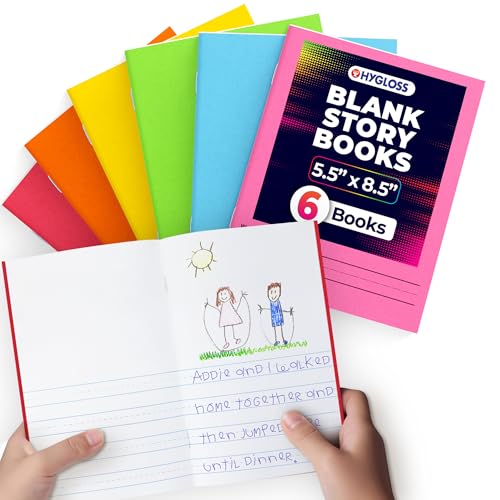
Best for: Classrooms and homes that benefit from colored pages to attract attention and organize work by color. The half‑blank layout supports storytelling with space for pictures above and writing below. This is ideal for K‑2 students who enjoy vibrant visuals and need structure for handwriting practice.
Why chosen: The color variant can aid focus by providing a distinct, engaging surface. This option is useful for early literacy centers and kid journals. A limitation is that coverage of colored areas may slightly affect ink visibility depending on pen type, so test pens before large use.
Oxford Primary Spiral Notebooks – 3 Pack

Best for: Pre‑K and early K‑2 students who need durable covers and easy writing surfaces. Each notebook offers 80 sheets with primary ruled paper and a space for drawing per page. The three‑pack provides ample practice material for a school term.
Why chosen: The lay‑flat design and plastic covers resist spills, making it practical for younger learners. The half‑line grid with dotted midline helps learners align letters and form tall, small, and descending letters. A consideration is that the pages are spiral bound, which may be less suitable for flat, tabletop writing in very small spaces.
iScholar Primary Composition Book

Best for: Students who need a clear bottom half ruled for handwriting while keeping an unruled top for drawing or notes. The 9.75 x 7.5 inch size is compact for notebooks in backpacks. Inside, the manuscript and cursive letters are shown on covers, aiding reference during practice.
Why chosen: The dual focus helps with both writing discipline and creativity. The sewn pages offer durability for daily use. A caveat is that the top is unruled, which may be less suitable for students who require more line guidance for early letter formation.
Trandraft 50 Sheets Writing Paper

Best for: DIY writing kits, back‑to‑school gifts, and storytelling activities. The paper is half drawing space and half writing lines, with a top area reserved for names or story titles. Each sheet uses a two‑bold‑line and dotted middle guide for easy handwriting practice.
Why chosen: This option supports free drawing, journaling, and structured writing in one sheet. It’s a practical starter pack for classrooms or homes. A limitation is that only 50 sheets are included, so larger projects may require additional packs.
Buying Guide: How to Choose Half Blank Half Lined Paper
What page layout supports your child’s learning style? Choose a layout with a clear top drawing area and a bottom writing space if your student benefits from mixed media. Prefer dotted midlines and a prominent baseline to guide letter sizing for beginners.
What size works best? Most options here are 8.5 x 11 inches or close in dimensions, suitable for standard notebooks and backpacks. Smaller sizes fit in desks or writing stations with limited space.
Which binding matters? Spiral bound notebooks lay flat, which helps younger students write. Glue‑bound or stitched pages can be durable but may be less forgiving for daily use in backpacks.
Color and print: Colored sheets can boost engagement for some learners but may affect ink visibility. Test with pencils or low‑bleed markers before committing to a bigger purchase.
Durability and quantity: A larger pack reduces cost per page and supports ongoing practice. Durable covers prevent bending and tearing in classrooms or at home.
Best for whom: If a child loves drawing, a half‑blank top area is ideal. If handwriting practice is the primary goal, ensure the writing space has enough lines and a guiding midline.
FAQ
- What is half blank half lined paper good for? It supports drawing and writing on the same page, aiding creativity and handwriting practice.
- Is colored paper better for focus? Some learners benefit from color cues, but ink visibility can vary by marker type.
- Which size should I choose for school? 8.5 x 11 inches is common and backpack friendly, but smaller sizes work well for desk space.
- Should I pick spiral or glue-bound notebooks? Spiral bindings lie flat for easier writing, which helps younger students.
- How many pages should a student need? A larger pack offers more practice, especially through a full school term.