The best hold-open door closer depends on door weight, opening angle, and how frequently the door is used. The STRIKE TS8000 is best for high-traffic commercial doors needing adjustable control; the BRINKS closer suits lighter interior doors; and the Baridwon model is aimed at doors weighing 143 to 187 pounds. Compare the listed door ranges and mounting requirements before choosing, since a closer that is too strong or incorrectly installed may make a door difficult to operate.
| Product | Best For | Key Detail |
|---|---|---|
| STRIKE TS8000 | Commercial, high-traffic use | Adjustable sizes 1–6; three control valves |
| Baridwon Heavy Duty | Doors weighing 143–187 pounds | Hold-open above 90 degrees |
| Yale 2700 | Commercial installations | Grade 1; hold-open stop arm |
| SOPHIA DK500 | Home and varied door types | Size 3; hold-open from 90° to 180° |
| BRINKS Light Duty | Light interior doors | Up to 30 inches wide and 100 pounds |
STRIKE TS8000 Commercial Door Closer

Best for: Commercial entrances and other high-traffic doors that need adjustable closing behavior. Its spring adjusts across sizes 1–6, with listed coverage for doors weighing 44–330 pounds and measuring 30–60 inches wide.
The hold-open arm keeps the door at a chosen angle for tasks such as deliveries or ventilation. Three valves control backcheck, latching speed, and delayed closing. The product is listed as ANSI/BHMA Grade 1, UL certified, and ADA compliant, with a stated 2-million-cycle test rating.
Why it was selected: The broad stated door range and separate motion controls make it the most adjustable option in this list. Limitation: Its wide adjustment range does not mean every door is suitable; confirm the door’s size and installation requirements before purchase.
Baridwon Heavy Duty Hold-Open Closer

Best for: A door weighing 143–187 pounds when a hold-open position above 90 degrees is needed. The manufacturer says the door can remain open at an angle in that range and close after it is released.
Two speed valves adjust closing and latching speed. The product instructions recommend making small adjustments with a flathead screwdriver and testing the result. When replacing an existing closer, estimate the door weight and account for added drag from weather stripping or a tight threshold.
Why it was selected: Its clearly specified weight range helps shoppers compare it with heavier doors. Limitation: The listed controls adjust closing and latching speed, not the force required to push the door open. A lighter-than-specified door may be harder to operate.
Yale 2700 Hold-Open Door Closer

Best for: Buyers seeking a commercial-grade closer with a hold-open stop arm and a full cover. The product listing specifies door sizes 1–6 and an aluminum body with a painted aluminum finish.
Its listed certifications include ANSI/BHMA A156.4 Grade 1 and UL and cUL listing, including UL10C. The listing also states that it meets ADA and ANSI/BHMA A117.1 requirements.
Why it was selected: The Grade 1 rating and named compliance standards make it a relevant option for commercial projects where those specifications matter. Limitation: The supplied product details do not provide a door-weight range or the hold-open angle, so check the installation documentation for fit.
SOPHIA DK500 Size 3 Door Closer

Best for: Home or mixed-use settings needing a size 3 closer with a hold-open range from 90 to 180 degrees. The listing says the angle and holding thrust can be preset and describes use with right- or left-handed doors and several door materials.
The die-cast aluminum closer is listed as ANSI Grade 3 and as meeting UL228 and UL 10C fire-resistance testing standards. The manufacturer also states a 500,000-cycle rating, a three-hour fire-resistance requirement, and an operating range of -22°F to 131°F.
Why it was selected: Its stated angle range and broad listed applications offer flexibility for buyers who do not need a Grade 1 model. Limitation: It is size 3, so confirm that this spring size suits the door and local requirements.
BRINKS Light-Duty Residential Closer
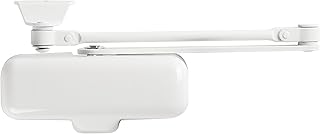
Best for: Light interior doors up to 30 inches wide and 100 pounds. Its hold-open feature engages at 80 degrees, and the listing describes a 180-degree opening range.
The closer controls closing and latching to reduce slamming and is listed as ADA compliant. It has a specific installation constraint: it can only be mounted in the parallel position on the push side of the door. The listed body hole pattern is 3/4 by 4-15/16 inches.
Why it was selected: Its stated door limits and hold-open angle make it easy to compare for residential use. Limitation: Avoid this option for doors exceeding the listed width or weight, or where the required mounting position is unavailable.
Buying Guide: How to Choose a Hold-Open Door Closer
What door weight and width should you check?
Start with the door’s actual weight and width, then compare them with the closer’s stated range. The STRIKE model lists a broad range of 44–330 pounds and 30–60 inches, while the BRINKS model is specified for doors up to 100 pounds and 30 inches wide. The Baridwon model targets a narrower 143–187-pound range. Do not assume that a larger closer is automatically better for a lighter door.
At what angle does the door stay open?
Hold-open behavior varies. The BRINKS feature engages at 80 degrees. The Baridwon listing describes holding at angles above 90 degrees, and the SOPHIA model lists a 90°–180° range. The STRIKE lets users choose an angle, while the supplied Yale details do not state an angle. Check the product instructions and the opening space available at your doorway.
Which controls or mounting details matter?
Separate speed valves can help adjust closing behavior, but they do not necessarily change how hard a door is to push open. Confirm the mounting position, door handing, and installation pattern before ordering. BRINKS specifies parallel mounting on the push side; other products may have different installation requirements.
Do ratings and fire-related claims affect the choice?
Compare listed grades and standards with the needs of the project, and verify requirements with the building authority or a qualified installer. A product listing’s certification or fire-related statement does not establish that a particular door-and-closer installation meets every local code.
Frequently Asked Questions
What is a hold-open door closer?
It is a door closer with an arm or mechanism that can keep a door open at a set position. When released, the closer is designed to return the door to a closed position.
Can any door closer hold a door open?
No. Choose a model specifically listed with a hold-open feature. Standard closers may close a door automatically without holding it open.
Does a hold-open closer stay open at any angle?
Not necessarily. The supported angle depends on the model. Check its listed hold-open range and installation instructions before buying.
Can I adjust a door closer to make the door easier to push?
Not always. Some valves control closing and latching speed rather than opening force. Use the manufacturer’s adjustment instructions and avoid forcing adjustment screws.
Should a fire-rated door be held open?
Follow applicable fire and building requirements for the specific door and installation. Confirm whether the chosen closer and hold-open arrangement are permitted for the intended location.