Answering the need for quick, visual number practice, large-number flash cards help kids recognize digits, count with confidence, and build early math fluency. This guide highlights five top options that emphasize big, easy-to-read digits and clear visuals. Best for kindergarten through early elementary learners, these sets suit households, classrooms, and homeschooling routines. The selections balance durability, portability, and clear number ranges from 0 to 100, with some options including extra features like dry-erase surfaces or magnetic formats for interactive practice. Use the table below to compare core details at a glance.
| Product | Number Range | Best For | Note |
|---|---|---|---|
| Scholastic Flash Cards: Numbers 0 – 100 | 0–100 | Preschool to early elementary learners needing sturdy, color-fast cards | Heavy duty cardstock; double-sided |
| Limque Number Flash Cards | 0–100 (0–25, 30–100 on tens) | Toddlers and beginners for counting with visuals | Includes 5 dry-erase markers |
| Learnworx Toddler Flash Cards | 0–100 | Engaging, colorful practice with number recognition | Double-sided with visual quantity representations |
| Trend Enterprises Numbers 0–100 Pocket Flash Cards | 0–100 | School and home use with quick-sorting, durable cards | No-see-through; rounded corners |
| LEARNING ADVANTAGE Number Cards 0–9 | 0–9 (5 copies each + activities) | Foundational digit recognition and place-value practice | Multiple activities included |
Scholastic Flash Cards: Numbers 0 – 100

Best for: Parents and teachers seeking a durable, classroom-ready set for numbers 0 to 100. The double-sided format supports quick drills and quick self-checks, making it ideal for sit-down practice or on-the-fly number games. The heavy-duty cardstock and color-fast coating reduce wear from frequent handling.
Why selected: This deck provides broad range coverage with straightforward visuals, suitable for introducing number recognition and basic counting. Its durability supports daily use in homes or classrooms. A potential limitation is that no erasing surface is included, so you may pair it with a separate dry-erase option if needed.
Limque Number Flash Cards
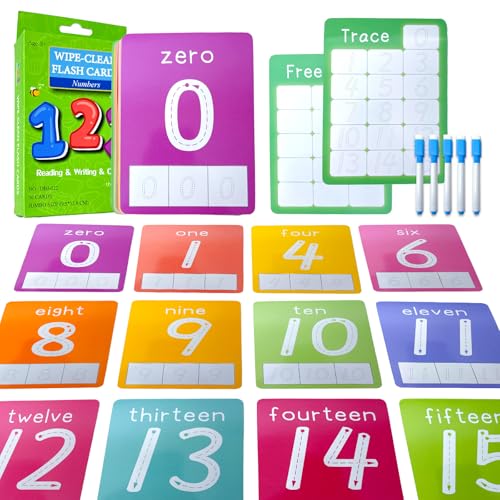
Best for: Toddlers and preschoolers who benefit from both number visuals and on-card quantity cues. The set includes 36 double-sided cards and five dry-erase markers, supporting both recognition and write-and-count activities. The rounded corners add safety for younger learners.
Why selected: The front-back design with numbers on one side and quantities on the other helps bridge numeral understanding with visual counting. A limitation is that the tens numbers (30–100) are spread across additional cards, which might require more storage or organization for very young learners.
Learnworx Toddler Flash Cards

Best for: Early learners who benefit from visual representations paired with numbers. This set offers 101 double-sided cards covering 0–100, with on-reverse illustrations that align numerals to quantities, aiding number sense and counting skills.
Why selected: Bigger cards and bright illustrations help hold attention and support independent exploration, especially for preschoolers. A potential caveat is that the sheer number of cards may require mindful organization to keep routines efficient in a busy classroom or homeschool setting.
Numbers 0-100 Pocket Flash Cards

Best for: Home and classroom use where compact, pocket-sized cards are advantageous for travel or quick, on-the-go practice. The set reinforces number words and digits from 0 to 100 and includes ideas for activities.
Why selected: Durable, no-see-through cards with rounded corners support frequent handling and easy sorting. A limitation is that the pocket format may be less comfortable for very young children with motor-skill challenges, depending on card size and handling comfort.
LEARNING ADVANTAGE Number Cards 0-9

Best for: Beginners focusing on digit recognition, place value, and early math fundamentals. A set of 50 cards includes multiple copies of each digit and four activity cards to diversify practice.
Why selected: Clear, large digits and extra activities promote hands-on math exploration beyond simple flashcard drills. A potential limitation is that the deck focuses on single digits; for extended counting practice, pair it with a 0–100 set.
Buying Guide: Practical Choices For Large Number Flash Cards
What should you look for when choosing large-number flash cards?
Number range and density: If your child is just starting, a 0–9 deck helps establish digit recognition. For ongoing practice, 0–100 sets extend counting and place-value work without too much complexity.
Card durability: For frequent handling by kids, look for thick cardstock or coated finishes that resist wear and stay legible over time. Durable corners and rounded edges reduce tearing and promote safer use.
Double-sided versus visuals: Double-sided cards with quantity illustrations support concrete counting concepts. Visuals help kids connect digits to real-world quantities, aiding memory and recall.
Size and readability: Larger digits are easier for young learners to see from a distance. Consider card dimensions that suit your space, from classroom whiteboards to small dining tables.
Extras and formats: Dry-erase compatibility, magnetic surfaces, or bundled markers can expand how you use cards. Magnetic or erasable formats encourage repeated practice without waste.
Safety and age range: Ensure materials are non-toxic and age-appropriate, especially for toddlers who may mouth objects. Rounded corners are a practical safety feature.
How To Use These Cards Effectively
- Daily quick drills: 5–10 minutes of rapid-number identification builds fluency.
- Counting chains: Lay out cards in order from 0 to 100 and practice counting aloud.
- Match and write: Use dry-erase markers to write the number words or to trace the digits on the cards.
- Number games: Create simple matching or sequencing games to reinforce connections between digits and quantities.
- Small-group activities: Pair learners for turn-taking and peer support during flashcard challenges.
Frequently Asked Questions
- What is the ideal age for large-number flash cards? — Best for ages 3 and up, with readiness varying by child and curriculum.
- Should I choose 0–9 or 0–100 first? — Start with 0–9 to build digit recognition; add 0–100 sets as counting skills advance.
- Are magnetic flash cards better than traditional ones? — Magnetic formats support interactive, on-whiteboard practice but may be less portable.
- How many cards should I use in a session? — Short, focused sessions (5–15 minutes) with 20–40 cards typically work well for young learners.
- Can these sets support classroom standards? — Yes, many sets align with basic number recognition and counting goals common in early math curricula.
- What safety features should I look for? — Rounded corners, non-toxic materials, and durable coatings are important for younger children.