When selecting a check valve, a low cracking pressure is essential to prevent backflow while maintaining reliable system pressure. This article reviews five Amazon-listed check valves that offer low opening pressures and strong durability across fuel, water, and gas applications. Each product section provides key specifications, construction details, and practical usage notes to help you compare options at a glance.
Summary of chosen products
| Product | Brand | Size / Connection | Cracking Opening | Material | Recommended Use |
|---|---|---|---|---|---|
| EVIL ENERGY 3/8″ Fuel Check Valve One Way Inline | EVIL ENERGY | 3/8″ (10 mm) OD | 0.5 psi opening (approx.) | 6061-T6 aluminum, black anodized | Gasoline/Diesel fuel lines |
| EVIL ENERGY 3/8″ Check Valve, 2 Pcs | EVIL ENERGY | 3/8″ (10 mm) OD | 0.5 psi opening (approx.) | 6061-T6 aluminum, black anodized | Fuel lines, general inline use |
| Megairon 1/2″ NPT Female WOG1000 Check Valve | Megairon | 1/2″ NPT female | 4.5 psi | Stainless steel SS316 / CF8M (valve body) | Water, oil, gas lines |
| Quickun 1/4″ One Way Inline Check Valve | Quickun | 1/4″ | Not specified in listing | PVDF body, silicone diaphragm | Fuel, oil, water, gas, air lines |
| BBTUS 3/8″ Inline Check Valve | BBTUS | 3/8″ (10 mm) | Not specified in listing | ABS shell, silicone diaphragm | Fuel, gas, water lines |
EVIL ENERGY 3/8″ Fuel Check Valve One Way Inline

Specifications show a 3/8 inch (10 mm) outer diameter and a low upstream opening pressure around 0.5 psi, with a working range up to 87 psi. The valve uses a high-strength 6061-T6 aluminum alloy body with black anodizing for corrosion and wear resistance. A stainless steel spring inside enables one-direction flow, preventing backflow and helping maintain stable system pressure in fuel lines. Appropriate for diesel and gasoline applications, this inline valve is designed for compact, high-performance fuel routing.
EVIL ENERGY 3/8″ Check Valve, 2 Pcs
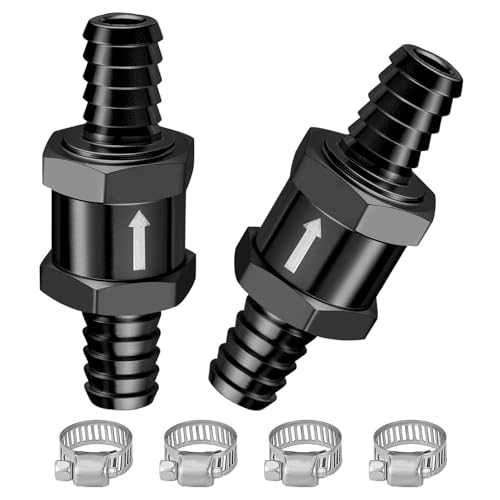
This 2-pack feature mirrors the 3/8″ size with a similar aluminum alloy construction and black anodized finish. The stainless steel spring ensures unidirectional flow and reduces backpressure in inline fuel lines. With a wide operating temperature range, it supports reliable performance in varying climates and vehicle environments. These valves are suitable for gasoline, diesel, and coolant lines in compact engine bays or fuel systems requiring low cracking pressure.
Megairon 1/2″ NPT Female WOG1000 Check Valve

Megairon’s 1/2″ NPT female valve is rated WOG1000, indicating robust capacity for water, oil, and gas lines. It offers a cracking pressure of about 4.5 psi and is rated for temperatures from -60°F to 450°F (-51°C to 232°C). The valve uses stainless steel components with a CF8M or SS316 interior construction, delivering strong corrosion resistance and durability under high pressures. This is a solid option where a higher cracking pressure is acceptable or desired, such as in larger fuel or water transfer lines.
Quickun 1/4″ One Way Inline Check Valve

Quickun’s 1/4″ inline valve uses a PVDF plastic body with a silicone diaphragm, offering corrosion resistance and compatibility with fuels, oils, and gases. The spring-loaded design ensures one-way flow, reducing the risk of reverse pressure surges. This compact valve is suitable for small-scale or DIY fluid systems where a lightweight, chemical-resistant valve is needed. The listing specifies two pieces per package, making it convenient for multi-point installations.
BBTUS 3/8″ Inline Check Valve

BBTUS presents a 3/8″ inline check valve with ABS outer shell and silicone rubber diaphragm. The ABS body provides rigidity and heat resistance, while the silicone diaphragm ensures reliable sealing. This valve is suitable for a variety of liquids and gases in small to mid-scale systems, where a compact, durable, and chemically resistant component is advantageous. The listing emphasizes inline use and a non-return function to prevent backflow.
Buying Guide: Key Purchase Considerations
Selecting the right low cracking pressure check valve depends on several factors. Here are the main considerations to help you compare options objectively.
- Cracking pressure and flow direction: Low opening pressures enable early detection of backflow but ensure the valve seals well under normal operating pressures. Verify the intended service pressure range to match your system.
- Material and environment: Aluminum bodies offer light weight and good corrosion resistance for fuel lines; stainless steel bodies excel in harsh chemical or high-temperature environments; plastics like PVDF provide chemical resistance with lower weight.
- Medium compatibility: Check valve materials must be compatible with the transferred fluid (fuel, water, oil, gas, coolant). Some diaphragms and seals are rated for specific fluids and temperatures.
- Temperature range: Extreme temperatures affect material performance and seal integrity. Ensure the chosen valve sustains the expected ambient and fluid temperatures.
- Connection size and type: Match the valve size to the pipe or hose diameter (for example, 1/4″, 3/8″, or 1/2″ NPT or barb connections). Inline and barb variants suit different plumbing layouts.
- Durability and maintenance: Look for valves with stainless components and corrosion-resistant finishes to reduce wear and leakage risk. Some models are designed for easy replacement of diaphragms or springs.
- Application specifics: Fuel lines, water circulation, and pneumatic systems have different backflow risks. Choose a valve designed for your primary medium and operating environment.
Practical recommendations: For fuel lines requiring low cracking pressure, EVIL ENERGY’s 3/8″ models provide compact inline solutions with aluminum bodies and stainless springs, balancing weight, durability, and performance. For higher-pressure or more demanding water or gas applications, Megairon’s 1/2″ valve offers a robust stainless steel option, though with a higher cracking pressure. Quickun and Blulu variants emphasize plastic bodies and bulk options, which can be cost-effective for multiple installations but may require careful compatibility checks with aggressive chemicals. Always verify installation orientation and ensure proper sealing with appropriate fittings and clamps.