Answering the search for reliable, hands‑free water delivery on boats, this guide highlights five top marine foot pumps that connect to 1/2″ hoses and feed galley sinks, toilets, and bilges. These pumps are best for boaters who want a hands‑free water supply, RV travelers needing compact options, and small yacht crews seeking quick water access without electric power. Each product section explains who it’s best for and why it was selected, with practical cautions where relevant. A quick comparison table below helps you compare core specs at a glance.
| Product | Max Flow | Hose Size | Best For |
|---|---|---|---|
| Whale Gusher Galley Mk3 | Up to 4 GPM | 1/2″ hose | Galley use with hands-free operation |
| GHmarine 2147 | Up to 2.2 GPM | 1/2″ hose | Compact, easy to install for small spaces |
| Pactrade Marine Baby | Up to 2.11 GPM | 1/2″ hose | Slim footprint for tight quarters |
| Whale Babyfoot | Up to 2.2 GPM | 1/2″ hose | Simple galley and camping sinks |
| QuickMariner | Up to 2.2 GPM | 1/2″ hose | Versatile, portable boat and RV use |
Below are five carefully selected marine foot pumps that fit typical boat, RV, and camping sink needs. Each entry includes why it’s a fit, who should consider it, and any practical caveats to watch for.
Whale Gusher Galley Mk3 Manual Pump
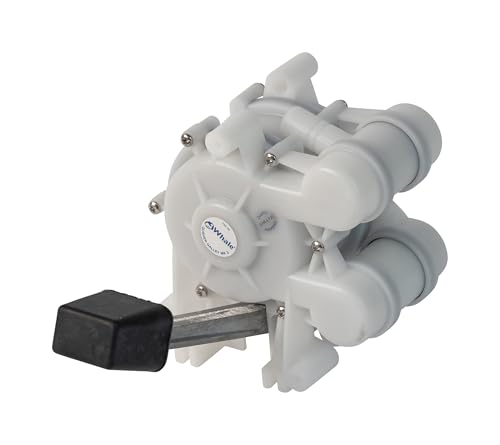
Best for: Boaters who want hands-free water delivery in the galley with a high output. The Mk3 supports up to 4 GPM, enabling quick rinsing and dishwashing while keeping hands free for cooking. It is self-priming and features multi-directional hose connections for flexible installation in tight spaces. Choose this if you need strong flow and versatile mounting options in a compact footprint.
Why selected: High flow and robust design suit frequent galley use. The right-side foot lever allows ergonomic operation for many cockpit layouts.
Caution: Ensure compatible mounting space for the multi-directional connections and verify hose compatibility in your vessel’s plumbing plan.
GHmarine 2147 Foot Pump

Best for: Boaters needing a compact, easy-to-install pump for small spaces or RV setups. It connects to 1/2″ flexible hose and provides reliable, self-priming operation with a modest flow rate of up to 2.2 GPM.
Why selected: Notable for its small size (about 5″ long) and straightforward foot operation, making it ideal for compact galley installations or boat compartments where space is at a premium.
Caution: Flow is lower than high-output galley units; best for moderate water use and limited countertop rinsing tasks.
Pactrade Marine Baby Foot Water Pump
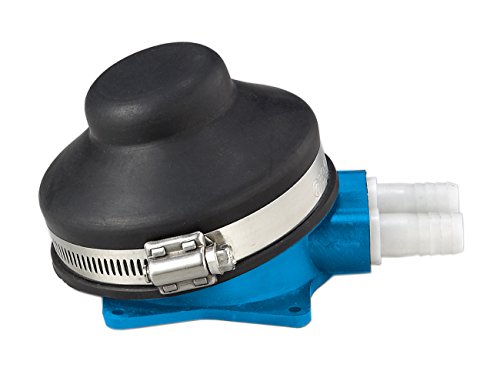
Best for: Mariners seeking a compact, budget-friendly foot pump for galley, RV, or small boat applications. It uses a nylon-PA66 base with a rubber pump body and SS304 clamps for durability and easy storage.
Why selected: Its small footprint and simple operation support installations in tight bilge or galley corners where larger units won’t fit.
Caution: Maximum flow is about 2.11 GPM; not ideal for heavy dishwashing or frequent high-flow water use.
Whale Babyfoot Manual Freshwater Pump

Best for: DIY boaters needing a proven, reliable 1/2″ hose connection with straightforward manual operation for galley and other small water needs. It is self-priming and offers up to 2.2 GPM.
Why selected: The Babyfoot is a trusted option for both galley use and auxiliary applications like camping sinks on boats or RVs due to its balanced size and performance.
Caution: Ensure mounting space accommodates the 1/2″ hose fittings and that the pump’s footprint fits your intended installation area.
QuickMariner Manual Foot Pump

Best for: Sailors and campers who value portability and versatility. This pump connects to 1/2″ flexible hose and delivers up to 2.2 GPM, suitable for galley, bilge, RV, and camping sinks.
Why selected: Its compact size and broad compatibility with various freshwater systems make it a flexible choice for multi‑use vessels and off‑grid setups.
Caution: The pump is manual; for frequent high-volume use, consider a higher‑flow alternative to minimize pumping effort.
Buying Guide
What to consider when choosing a marine foot pump
- Flow rate: Higher GPM is better for dishwashing and rapid rinsing, but may come with higher effort or size. Match your typical water tasks to a pump that provides adequate flow without overkill.
- Hose compatibility: Most small marine pumps use 1/2″ flexible hose. Confirm your hose size and clamp compatibility to ensure a leak-free connection.
- Foot efficiency and ergonomics: Look for a design with a comfortable pedal and a self-priming feature to reduce pumping effort and start up quickly.
- Size and mounting: Measure available space in the galley, bilge, or cabinet. Consider multi‑directional inlet/outlet connections if space is constrained.
- Self-priming and reliability: Self-priming pumps help when the water tank is located below the pump. Seek models with proven, simple mechanical operation for minimal maintenance.
- Materials and corrosion resistance: Stainless or brass components (where applicable) resist saltwater exposure and improve longevity in marine environments.
- Electrical independence: Foot pumps run without electricity, which is advantageous for off-grid scenarios or when solar power is limited.
Which pump is best for different setups?
- Best overall galley performance: Whale Gusher Galley Mk3 for high flow and flexible installation.
- Best for tight spaces: GHmarine 2147 and Pactrade Marine Baby for compact footprints.
- Best for simple, proven reliability: Whale Babyfoot and QuickMariner for versatile, everyday use.
Installation and maintenance tips
- Check hose clamps and fittings during setup to prevent leaks in wetted areas.
- Keep the pump clean and free of debris to maintain smooth operation and prevent clogging.
- Test the system with water before permanent mounting to ensure no drips or misalignments.
- Store spare clamps and hose in the cabin to handle quick repairs at sea.
FAQ
- Q: Do these pumps require electricity? A: Most listed pumps are manual foot-operated and do not require electricity.
- Q: What hose size do I need? A: Most models use 1/2″ flexible hose; verify your model’s specifications.
- Q: Can I use these for seawater or bilge water? A: Many are designed for freshwater, but some can handle general marine uses; check the product details for compatibility.
- Q: Are these pumps self-priming? A: Several models advertise self-priming features, which helps when the source is elevated or pressurized differently.
- Q: Is a high-flow pump better for galley use? A: Higher flow improves speed for rinsing and dishwashing but may require more effort or space for installation.
- Q: How do I avoid leaks? A: Use the correct hose size, secure clamps, and ensure a fully sealed junction with O-rings or gaskets where applicable.