Whether you’re teaching anatomy in a classroom, preparing for medical studies, or exploring neuroscience at home, a high-quality brain model helps make complex structures tangible. This guide highlights five top brain models that best fit different learning needs—from life-size demonstrations to durable classroom aids. Each option is evaluated for clarity, durability, and ease of use, so you can choose efficiently. The top picks are ideal for students, educators, clinicians, and curious lifelong learners.
Summary table of selected products
| Product | Best For | Key Benefit | Limitations |
|---|---|---|---|
| Avarstic 1:1 Life-Size Brain Model | Classrooms & demonstrations | 1:1 realism with detachable halves | May be too detailed for very young learners |
| Avarstic 2X Life-Size 4-Part Magnetic Model | Interactive learning | 131 labeled parts, magnetic sections | Heavier; setup takes time |
| ZENFUN Life-Size Brain Model | General science displays | Color-coded, durable PVC | Smaller size than full-scale rivals |
| Merhoff & Larkin Cross Section Foam Brain Model | Hands-on psychology lessons | Interlocking halves; tactile | Foam material may be less durable |
| QWORK 11-Part Skull & Brain Model | Combined skull and brain study | Two-in-one educational focus | Smaller brain component set |
Avarstic 1:1 Life-Size Brain Model
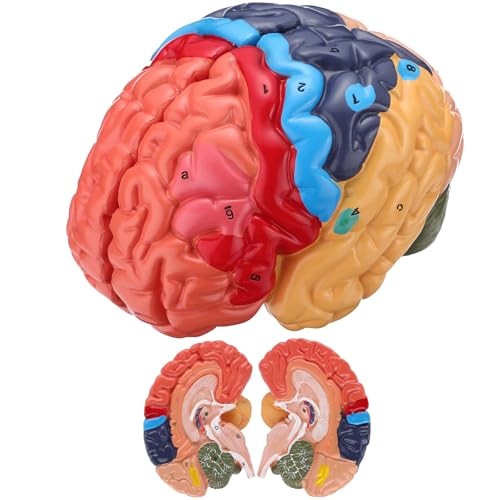
This 1:1 brain model mirrors real human brain anatomy with realistic proportions and surface textures. It uses a detachable two-part design to show internal structures clearly, aiding demonstrations and interactive study. Laser-engraved labels alongside color-coded regions help learners identify key brain areas efficiently. Best for educators and instructors who need to reveal internal anatomy during lectures.
Who it’s best for and why: ideal for classrooms and anatomy labs where clear observation of internal features is essential. The two-part construction makes it easier to illustrate exposure of major regions without sacrificing durability. A potential limitation is that the realistic detail may be overwhelming for beginners who need a simpler overview.
Avarstic 2X Life Size 4-Part Magnetic Model

This model doubles the scale with 131 labeled brain structures and four detachable magnetic parts, including hemispheres, cerebellum, and brainstem. Color-coded regions and laser-engraved labels enhance clarity and durability for repeated handling. Best for advanced learners and professional demonstrations where precise localization matters.
Who it’s best for and why: suited to neuroscience students and medical professionals who benefit from 2X life-size detail and modular components. Better for interactive labs than for casual display. Limitation: heavier weight and longer setup time may reduce ease of use in quick lessons.
ZENFUN Life-Size Brain Model

This color-coded, two-part brain model emphasizes major lobes and brain regions with distinct colors for quick identification. Constructed from durable PVC, it offers a life-like appearance at a practical size for displays and patient education. It is well-suited for general science classrooms and health clinics.
Who it’s best for and why: ideal for teachers needing a reliable classroom display or patient education tool without overwhelming detail. Choose this if you want balance between realism and ease of use. Limitation: smaller scale compared with full-size models may not capture every anatomical nuance.
Merhoff & Larkin Cross Section Foam Brain Model

Designed with two interlocking halves, this foam brain model provides a hands-on learning experience. It offers color-coded structures with clearly printed labels, making it a practical teaching aid for beginners and youth education. It also serves as a thoughtful psychology-related gift for students.
Who it’s best for and why: best for foundational courses and counseling contexts where tactile exploration supports memory. Limitation: foam construction may wear more quickly than harder plastics in high-traffic environments.
QWORK Skull and Brain Anatomy Model

The QWORK model combines a life-size skull and brain into a single educational tool. It includes 11 parts for the skull and eight brain components, with labeled diagrams for quick reference. Best for integrated study of cranial anatomy and brain structure in small-group settings.
Who it’s best for and why: suitable for compact classrooms and patient education where a combined skull-and-brain focus simplifies instruction. Limitation: smaller component set may limit deep exploration of brain pathways compared with larger, multi-part models.
DSFGFRR 2X Life-Size 4-Part Brain Model

This model magnifies 130 brain structures at 2X scale across four magnetic, detachable sections. It emphasizes emotion, memory, and learning centers with vivid color coding and laser-engraved labels that resist fading. Best for neuroscience classrooms and clinical training where clear structure labeling matters.
Who it’s best for and why: well-suited for formal education and therapy contexts requiring durable, repeatable demonstrations. Limitation: may have a stronger odor on unpackaging due to PVC materials, which typically dissipates after airing out.
WICHEMI 8-Part Life Size Brain Model

This 8-part, life-size brain model highlights color-coded arteries and brain regions for classroom display and study. The PVC construction is lightweight yet durable, designed to withstand routine handling in science classrooms. Best for general anatomy lessons and patient education demonstrations.
Who it’s best for and why: ideal for schools and community programs needing a reliable, straightforward brain model. Limitation: not as feature-rich as multi-part, magnet-enabled models for interactive dissections.
Buying Guide: Key Considerations For Choosing A Brain Model
- Learning goals: Do you need 1:1 realism, 2X life-size detail, or a simple introductory tool?
- Durability and material: PVC and foam vary in weight, feel, and wear resistance. Choose based on how often the model will be handled.
- Parts and assembly: Magnetic detachables, interlocking halves, or single-piece designs affect setup time and demonstration versatility.
- Labeling and color-coding: Laser-engraved vs printed labels influence longevity and readability in busy classrooms.
- Size and display: Larger models are visually impactful for classrooms; smaller models fit compact spaces or patient education settings.
- Practical cautions: Some models may have odor shortly after unpacking or require careful handling of detachable pieces.
Frequently Asked Questions
- What is the best brain model for interactive demonstrations?
Models with detachable sections and magnetic joints are ideal for hands-on teaching and demonstrations. - Are color codes important for learning brain anatomy?
Yes, color-coding helps students quickly identify lobes and regions, improving recall. - Which model is best for patient education?
Smaller, durable models with clear labeling and straightforward anatomy are typically best for clinics. - Do laser-engraved labels last longer than printed labels?
Yes, laser-engraved labels resist fading and wear with repeated handling. - Is a skull-and-brain combined model useful?
Yes, it provides integrated context for how skull structures relate to brain anatomy in teaching scenarios. - What should I consider about odor when unboxing PVC brain models?
Some PVC models may have a brief odor; airing out the model can reduce this quickly.