Over-the-counter nearsighted glasses may help you see distant objects more clearly if their lens strength matches your needs, but they are not a substitute for a current eye exam or prescription. These five options are marketed as distance glasses, not reading glasses. The ZNEIAAPR styles emphasize blue-light coatings, the Jcerki option offers a basic myopia design, the three-pack prioritizes lightweight spare pairs, and SUNAMOY combines distance lenses with a lightweight frame. Check the available lens powers and fit before buying.
| Product | Best For | Standout Listed Feature |
|---|---|---|
| ZNEIAAPR Spring Hinge | Blue-light coating and flexible hinges | Spring-hinge frame |
| Jcerki Myopia Glasses | Shoppers seeking a basic distance-glasses option | Marketed for men and women |
| ZNEIAAPR Lightweight | Longer wear with a light frame | Listed weight under 30 g |
| Three-Pack TR90 | People who want spare pairs | Three colors and 15 g frames |
| SUNAMOY Spring Hinge | Distance use with a lightweight frame | Listed weight under 30 g |
ZNEIAAPR Spring-Hinge Distance Glasses

Best for: Buyers who want distance glasses with spring hinges and a listed blue-light-blocking coating. The product is explicitly described as being for seeing far away, not for reading. Its features also include a rectangular frame, anti-reflective technology, and lenses described as waterproof, wear-resistant, and easy to clean.
The listing identifies these glasses for activities such as driving, cycling, and fishing, but that does not establish that their lens power is right for every wearer or safe for every situation. Check the available strength before ordering. Avoid relying on them for driving if your vision remains unclear or the power has not been confirmed as appropriate.
Jcerki Basic Myopia Distance Glasses

Best for: Shoppers looking for a straightforward option marketed as nearsighted distance glasses for men and women. The supplied product details describe them as myopia spectacles and emphasize that they are not reading glasses. This makes the intended use clearer than a listing that does not distinguish distance and reading lenses.
The provided features do not specify frame material, weight, hinge type, coatings, or individual lens strengths. Compare the available powers and product dimensions with your needs before choosing. This is a less feature-detailed option than the other picks, so avoid it if a particular coating or lightweight frame is a priority.
ZNEIAAPR Lightweight Distance Glasses

Best for: Buyers who want a distance-glasses design with a stated weight below 30 grams. The listing describes a rectangular, scratch-resistant design and UV400 anti-blue-light coating. It is presented for seeing far away, with possible use around screens and during activities such as driving or cycling.
The weight may appeal to people who wear glasses for extended periods, but the listing does not establish an individual fit or prescription match. Confirm the lens strength and frame measurements before purchase. The blue-light feature does not replace a correct distance prescription, and the product is not intended for reading.
Three-Pack TR90 Distance Glasses

Best for: People who want multiple pairs for different locations or as backups. The listing specifies three colors, TR90 frame material, a stated frame weight of 15 grams, and spring hinges described as flexible. Those details make this the clearest choice for buyers prioritizing light frames and spare pairs.
The three-pack is useful only if the included lens strength works for the wearer. The product information provided does not identify the available powers or explain whether each pair has the same strength. Check those details before ordering, and avoid assuming that a spare pair can replace properly prescribed glasses.
SUNAMOY Lightweight Myopia Glasses
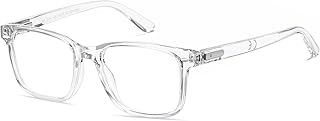
Best for: Buyers seeking a lightweight distance-glasses option with a blue-light feature. SUNAMOY describes the glasses as designed for far vision and lists a weight below 30 grams. The product description also mentions use with TVs, phones, tablets, computers, and driving.
Those use examples do not mean the glasses correct every type of vision problem or suit every wearer. The supplied features do not state lens powers, frame material, or hinge details. Confirm the strength and fit before buying, and do not use them for driving if they fail to provide clear vision.
Buying Guide: How to Choose Over-the-Counter Nearsighted Glasses
What does “nearsighted” mean on a glasses listing?
Nearsighted, or myopic, glasses are intended to correct distance vision. They are different from reading glasses, which are generally designed for close-up tasks. Check the listing carefully because similar product names can refer to different lens purposes.
How do I choose the right lens strength?
Compare the glasses’ available lens powers with your current prescription or guidance from an eye-care professional. The product details supplied here do not list specific strengths, so verify the power options on the product page. A fixed-power pair may not match both eyes or correct astigmatism.
Which frame features matter most?
For extended wear, compare stated frame weight and frame dimensions. Spring hinges may allow the temples to flex, while a multi-pack can provide spares. Coatings and frame materials are additional considerations, but they do not determine whether the lens prescription is right for you.
Are over-the-counter glasses suitable for driving?
Only use glasses for driving if they provide clear, comfortable vision and are appropriate for your vision needs. A product’s driving-related marketing does not confirm that its lens power is correct for you. Consult an eye-care professional if your vision is blurry or changes.
Frequently Asked Questions
Are nearsighted glasses the same as reading glasses?
No. Nearsighted distance glasses are intended to improve far vision, while reading glasses are intended for close-up vision.
Can over-the-counter glasses replace an eye exam?
No. They cannot determine your prescription or assess eye health. An eye exam can identify vision needs that a general-purpose pair may not address.
Do blue-light coatings correct nearsightedness?
No. A blue-light coating is a lens feature; the lens power is what corrects nearsighted vision. Confirm the strength separately.
Can I buy one strength for both eyes?
That may not match your vision. Check your prescription or ask an eye-care professional before choosing glasses with equal lens power for both eyes.