Yes, you can reliably join PEX to PVC with push-to-connect brass couplings. This guide highlights the best options for homeowners and pros tackling mixed-material piping projects. Top picks cater to different pipe sizes and using wet-line installations. This overview helps you choose which coupler is best for your project, whether you’re repairing a leak, upgrading an old line, or setting up a new fixture.
| Product | Pipe Size | Best For | Notes |
|---|---|---|---|
| SharkBite 1/2 Inch CTS x 1/2 Inch PVC Transition Coupling | 1/2″ CTS to 1/2″ PVC | Small-diameter transitions | Color-coded collars; push-to-connect; works in wet lines |
| SharkBite 3/4 Inch CTS x 3/4 Inch PVC Transition Coupling | 3/4″ CTS to 3/4″ PVC | Mid-range piping projects | Color-coded collars; easy disconnect with clip |
| SharkBite 1 Inch CTS x 1 Inch PVC Transition Coupling | 1″ CTS to 1″ PVC | larger scale transitions | Push-to-connect; suitable for wet-line installs |
| (Pack of 10) SUNGATOR 1/2 Inch Straight Coupling | 1/2″ to 1/2″ (various end connections) | Bulk projects and repairs | Brass, push-to-connect; includes disconnect tool |
| (Pack of 2) EFIELD 1/2-Inch X 1/2 Inch Straight Coupling | 1/2″ to 1/2″ | Value pack for PEX/CPVC/Copper | Lead-free brass; push-fit; compatible with Pex A |
SharkBite 1/2 Inch CTS x 1/2 Inch PVC Transition Coupling

The 1/2 inch CTS to 1/2 inch PVC transition coupling uses a brass push-to-connect mechanism to join PVC to other pipe types. The white collar connects to PVC schedules 40/80/120, while the tan collar is compatible with PEX, CPVC, PERT, SDR-9 HDPE, and copper. Best for compact spaces or small-diameter lines. Clear benefit: no glue, soldering, or special tools required. Best for wet-line installations. Limitation: limited to 1/2″ size; ensure collar matches your pipe type before purchase.
SharkBite 3/4 Inch CTS x 3/4 Inch PVC Transition Coupling
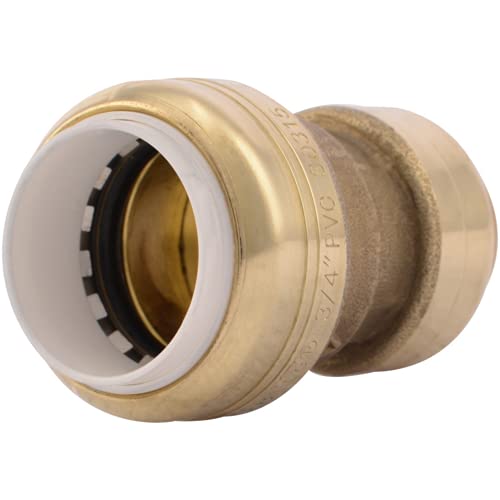
Designed to transition from PVC to a compatible pipe type, this 3/4″ coupling uses color-coded collars to indicate which side fits PVC versus PEX/CPVC/PERT/HDPE/copper. It’s push-to-connect for a watertight seal and can be installed in wet lines. The disconnect clip makes removal straightforward. Best for mid-size projects where pipe runs require quick, tool-free connections. Caution: ensure you remove the cap using the provided clip if you need to disassemble later.
SharkBite 1 Inch CTS x 1 Inch PVC Transition Coupling

This 1 inch transition coupling offers a straightforward push-to-connect interface between 1″ CTS and PVC pipes. The white collar connects to PVC; tan collar to PEX/CPVC/PERT/HDPE/copper. It’s a practical choice for residential or light commercial lines where a direct PVC-to-PEX path is needed. Best for larger diameter projects; better for new installs than for long, restricted runs. Limitation: bulkier size may be less ideal in tight spaces.
SUNGATOR 1/2 Inch Straight Coupling

Brass straight couplings by SUNGATOR provide a robust push-to-connect option for 1/2″ lines, compatible with PEX, copper, and CPVC. The kit typically includes a disconnect tool for easy removal. Best for cost-conscious projects needing multiple transitions in a single job. Limitation: may require careful handling to ensure a clean insertion, especially in cramped spaces.
EFIELD 1/2-Inch X 1/2 Inch Straight Coupling

EFIELD’s 1/2″ x 1/2″ straight push-fit coupling targets PEX, CPVC, and copper lines. The lead-free brass construction aligns with potable-water standards, and the product line emphasizes compatibility with all major PEX A pipe brands. Best for homeowners who want a straightforward, economical solution for small-to-mid sized projects. Limitation: always verify compatibility with your local plumbing codes and pipe tolerances.
Buying Guide
What to look for when choosing a PEX-to-PVC coupler:
- Pipe size compatibility: Confirm the CTS (Copper Tube Size) measurement and the PVC diameter before buying. Sizes range from 1/2″ to 1″ in typical residential projects.
- Collar color coding: White collars typically indicate PVC compatibility; tan collars indicate PEX/CPVC/PERT or copper compatibility. This helps prevent mis-connections.
- Push-to-connect reliability: Ensure the connector is rated for wet-line installation and provides a watertight seal without glue, solder, or crimping.
- Removal and maintenance: Some models include a disconnect clip or tool; consider this if you anticipate future disassembly or reconfiguration.
- Material quality: Brass fittings offer corrosion resistance and durability; lead-free brass is preferred for potable-water systems.
- Application scope: For small lines, consider 1/2″ fittings; for larger projects, 1″ fittings may reduce the number of transitions and simplify routing.
- Code and compatibility: Check local plumbing codes for any limitations on push-fit or specific materials in your area.
FAQ
Are push-to-connect PEX to PVC couplers reliable for outdoor installations?
Yes, when the fittings are designed for wet-line use and rated for outdoor exposure. Check the product specs for UV resistance and outdoor suitability.
Can I reuse a SharkBite coupling after disconnecting?
Some models allow removal with a clip, but reusing may depend on the insertion depth and wear on the ferrule. Follow the manufacturer’s guidance.
Do these couplers require any soldering or glue?
No tools, glue, soldering, or crimping are required for typical push-to-connect models.
Is there a risk of leaks with push-to-connect fittings?
Leaks can occur if the pipe ends are damaged, dirty, or not fully inserted. Clean, square ends and verify the seal after installation.
Which size should I choose for a retrofit project?
Choose the exact CTS size of the pipe you’re connecting to; the collar color will help identify the other compatible end.
Are these fittings compliant with potable-water standards?
Many are lead-free and designed for potable-water systems; confirm with the product description and local codes.