Prepared microscope slides are essential tools for biology education, enabling students and hobbyists to explore cells, tissues, and microstructures with minimal setup. This guide highlights five high-quality slide sets that cover a broad range of organisms and materials, from plant tissues to animal cells and microorganisms. When choosing, consider clarity, edge safety, labeling, and durability to ensure reliable results across lessons and experiments. The selections below balance value, educational versatility, and safe handling for both classroom settings and home science projects.
Overview at a glance:
| Product | Brand | Pieces | Highlights |
|---|---|---|---|
| OOZSTAR 120 Slides | OOZSTAR | 120 | Wide specimen range; robust case; rounded edges |
| DIY-SCIENCE 48 Slides | DIY-SCIENCE | 48 | Non-toxic plastic slides; well-labeled |
| DIY-SCIENCE 120 Slides | DIY-SCIENCE | 120 | Comprehensive specimen catalog; labeling guide |
| AmScope 25 Slides | AmScope | 25 | Preserved with cedar oil; fitted wooden case |
| JECONE 120 Slides | JECONE | 120 | Diverse specimens; no-sharp-edge design |
OOZSTAR 120 Microscope Slides with Specimens

OOZSTAR’s 120-slide set offers a broad array of prepared specimens, including plant, insect, animal tissues, algae, and cells. The slides are made from highly transparent glass, designed to fit standard microscope stages, and feature rounded edges to reduce the risk of cuts during handling. This kit is suitable for basic biology education at school or home, and the included variety supports topics such as histology, anatomy, and cellular structure. The edges are polished for safety, making it appropriate for younger learners under supervision.
DIY-SCIENCE 48 Prepared Microscope Slides
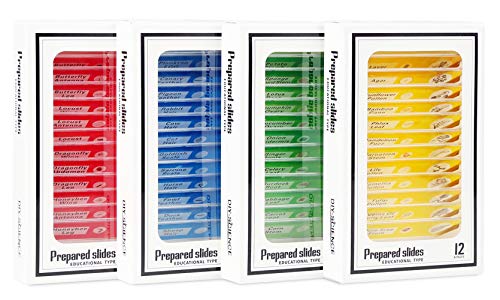
This set includes 48 prepared slides featuring animals, insects, plants, and flowers. The slides are made from high-clarity plastic, designed to be non-toxic and free of sharp edges, reducing handling risks. They come with clear classifications and labeling to facilitate organization and long-term storage. Clear observation is supported by lighting options that reveal staining and tissue distinctions, making it a strong starter kit for young students and beginners curious about anatomy.
DIY-SCIENCE 120 Microscope Slides Set

Offering a larger selection for more diverse lessons, this 120-slide bundle covers animal, plant, microbe, tissue, and cell specimens. Slides are glass-based and produced for lab-grade clarity with protective cases. A labeling and identification guide helps students map specimens to magnification and course topics, supporting deeper investigations beyond simple recognition and enabling more structured experiments aligned with STEM curricula.
DIY-SCIENCE 60 Microscope Slides

This 60-slide kit focuses on a balanced mix of animal, plant, and microbial samples. The slides use high-quality glass with safe, no-sharp-edge designs. Labels and identifiers are included to help track specimens and magnification references. The kit aims to complement NGSS-aligned K-12 biology education by providing durable slides suitable for repeated class use and homework experiments.
AmScope PS25 Prepared Microscope Slide Set

AmScope’s PS25 set provides 25 prepared slides with a cedar wood oil preservation method and a fitted wooden case for protection and easy transport. The slides are labeled to identify specimen details, aiding in quick study and review. This option emphasizes long-term preservation of samples while offering a compact selection ideal for introductory biology courses and home science labs seeking a traditional presentation format.
JECONE 120 Microscope Slides with Specimens
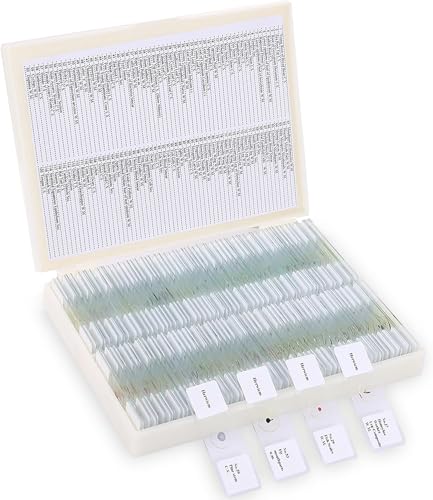
The JECONE set includes 120 prepared slides featuring a diverse mix of plant, animal, insect, and algae specimens. Crafted from premium optical glass, these slides prioritize clarity and uniform staining for accurate visualization of cellular structures. The no-sharp-edge design reduces the risk of cuts, making the set suitable for classroom use and independent study. The variety supports broader exploration of biology topics such as histology, microbiology, and anatomy.
Buying Guide
Key considerations when selecting prepared microscope slides include material quality, safety, and educational fit. Glass slides offer excellent clarity, but ensure edges are chamfered or frosted to minimize cuts. Plastic slides can be safer for younger students but may sacrifice some image sharpness. Look for complete labeling with specimen names, magnifications, and slide type to simplify tracking and review. A protective case or organized rack helps with storage and reduces the risk of breakage during transport.
Specimen variety matters for comprehensive learning. Sets with a mix of plant tissues, animal cells, and microbes enable cross-topic lessons—from cell structure to tissue organization and physiological processes. For NGSS-aligned classrooms, ensure the labeling guide connects specimens to core concepts and vocabulary, facilitating deeper inquiry rather than rote memorization.
Preservation and handling are practical concerns. Some slides are preserved with oils or dyes to maintain specimen integrity; verify compatibility with your microscopes and staining preferences. Safety features, such as rounded or chamfered edges, are important for younger learners. A sturdy, washable case supports long-term durability and reduces the risk of accidental loss or damage in busy lab spaces.
Price and value should balance with educational goals. Larger sets provide breadth for long-term projects and multiple classes, while smaller collections may be more appropriate for introductory units or limited budgets. Consider whether you need ready-to-use labeling guides, or if you prefer to create your own organization system for ongoing studies.
Compatibility with your equipment is essential. Check standard slide dimensions (commonly 25mm x 75mm) to ensure fit with most microscopes and stage clips. If staining quality or tissue differentiation is a priority, review user feedback about clarity, contrast, and staining consistency. Finally, assess whether the vendor offers a protective storage solution, replacement slides, or add-on sets to expand the collection over time.