The best purple hull pea seeds depend on how many plants you want, how quickly you want to harvest, and whether you prefer compact plants or longer harvest details. SVI 200 Mississippi Pinkeye Purplehull Peas are best for gardeners seeking upright plants and easy-shelling pods. KVITER Top Pick seeds are better for compact beds and an earlier harvest, while Thresh Seed Co. is a useful choice for gardeners who want harvest guidance for fresh, dried, and preserved peas.
| Seed option | Best suited for | Listed maturity |
|---|---|---|
| SVI 200 Mississippi Pinkeye | Upright plants and easy shelling | About 70 days |
| KVITER Top Pick, 150 seeds | More seeds and compact beds | 65 days |
| KVITER Top Pick, 75 seeds | Smaller planting | 65 days |
| Mixrug Pinkeye Purple Hull | Heirloom seeds for fresh or preserved peas | Not specified |
| Thresh Seed Co. Pink-Eyed Purple Hull | Several harvest and storage options | About 75 days |
SVI 200 Mississippi Pinkeye Purplehull Peas

These Vigna unguiculata cowpea seeds are listed as non-GMO heirloom seeds. The plants are described as upright and semi-vining, with pods held high for easier picking. Pods grow about 6 to 7 inches long and may contain up to 14 peas. They turn deep purple when ready and are described as easy to shell.
Best for: Gardeners who want raised-bed or row planting and a relatively clear planting schedule. The listing recommends sowing seeds 1 inch deep, spacing them 3 to 4 inches apart, and allowing about 70 days to harvest. It identifies full sun and fertile, well-drained soil as suitable conditions.
Consideration: The listing calls for warm-season planting and moderate watering. It does not provide a specific germination time, so buyers comparing start dates should not assume one.
KVITER Top Pick Pinkeye Seeds, 150 Count

KVITER describes this heirloom Top Pick as a compact, semi-vining cowpea with concentrated, top-set pods. The pods reach about 8 inches and turn purple at maturity. Seeds are listed as germinating in 7 to 10 days at temperatures of 65°F or higher, with peas maturing in about 65 days.
Best for: Gardeners seeking a larger seed quantity, tidy beds, or an earlier stated harvest than the 70- and 75-day options here. The cream-colored peas are described as smooth and earthy in flavor, and the listing says they can be eaten fresh, canned, or dried.
Consideration: The germination timing is tied to the listed temperature threshold. Gardeners sowing in cooler soil should not rely on the 7-to-10-day estimate.
KVITER Top Pick Pinkeye Seeds, 75 Count
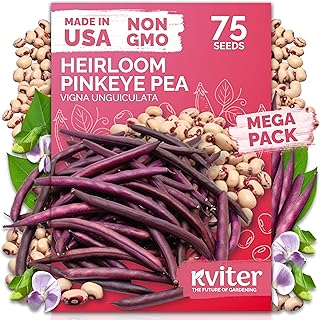
This is the smaller-count version of KVITER’s Top Pick Pinkeye offering. Its listed traits include compact, semi-vining plants, concentrated top-set pods around 8 inches long, purple color at maturity, and peas that shell easily when full. The listing gives the same approximate 65-day maturity and 7-to-10-day germination at 65°F or above.
Best for: Home gardeners who want the Top Pick variety but need fewer seeds than the 150-count listing. The stated compact growth and top-set pods may suit tidy garden beds where convenient picking is a priority.
Consideration: The product description does not provide a recommended spacing plan. Follow the seed packet directions for planting distance rather than assuming it matches another variety.
Mixrug Pinkeye Purple Hull Cowpea Seeds

Mixrug’s listing describes these as non-hybrid, non-GMO, open-pollinated heirloom seeds. It presents the variety as a southern cowpea with purple husks and green and purple coloring around the peas’ eyes when fresh. The listing also notes that peas can be eaten fresh or preserved by freezing, canning, or drying.
Best for: Gardeners looking for an heirloom seed option with several uses for the harvested crop. The stated fresh and preservation options can help buyers choose a variety for meals as well as pantry storage.
Consideration: The provided details do not state days to maturity, pod length, seed count, or a planting schedule. Choose this listing if those specifics are not essential to planning your garden.
Thresh Seed Co. Pink-Eyed Purple Hull Pea

This heirloom cowpea listing describes semi-erect plants that produce long purple pods held high on the plant. Pods average about 7 inches and contain around a dozen peas. Harvest is listed as beginning approximately 75 days after sowing and continuing for several weeks. The listing also describes good drought performance and disease resistance, without naming specific diseases.
Best for: Gardeners who want flexibility to harvest peas fresh at the green-shell stage or leave them to dry on the plant. The product description also explains their creamy-white mature color and pink eyes.
Consideration: Its stated maturity is about 75 days, later than the two KVITER options. Plan accordingly if an earlier harvest is a priority.
Buying Guide: How To Choose Purple Hull Pea Seeds
How soon do you want to harvest?
Compare the maturity estimates supplied with each product: KVITER lists about 65 days, SVI lists about 70 days, and Thresh Seed Co. lists about 75 days. These are product-description estimates, not guaranteed harvest dates. The Mixrug listing does not give a maturity estimate.
How many seeds do you need?
Compare the stated package counts before ordering. The listed options include 75, 150, and 200 seeds, as well as a 50-seed packet from Thresh Seed Co. A smaller packet may suit a trial planting; a larger count may be preferable for longer rows or succession planting.
What growing conditions and plant form matter?
Check each listing for plant habit, site, and sowing details. SVI specifies full sun, fertile, well-drained soil, and planting depth and spacing. KVITER describes compact, semi-vining plants and gives a germination temperature threshold. Purple hull peas are warm-season cowpeas, so use the packet instructions and local growing conditions to time sowing.
Do you plan to eat peas fresh or store them?
All five listings describe cowpea or southern pea types, but the handling details differ. KVITER mentions fresh, canned, or dried uses; Mixrug mentions fresh eating, freezing, canning, and drying; Thresh describes green-shell and dry harvest stages. Choose based on the harvest form you expect to use.
Frequently Asked Questions
Are purple hull peas the same as cowpeas?
They are a type of cowpea. The product listings also use names such as southern peas and field peas.
When are purple hull peas ready to pick?
Several listings describe pods turning purple at maturity. Follow the specific packet instructions and check pods as they develop.
How long do purple hull peas take to grow?
The products here list approximately 65 to 75 days for varieties that provide a maturity estimate. Actual timing may vary with growing conditions.
Can purple hull peas be dried for storage?
Yes. Several listings describe leaving peas to dry or drying them for storage, alongside fresh-shell harvest options.
What should I compare before buying?
Compare seed count, days to maturity, plant habit, germination guidance, and whether the listing explains fresh or dry harvest. These details help match a packet to your garden space and intended use.