Answering the search for engaging, science-forward renewable energy kits, these five selections help students and hobbyists explore solar, wind, and hydro power through real-world projects. They’re ideal for curious kids, classroom activities, and family STEM fun. Each kit highlights a different energy path, clear building instructions, and measurable outcomes. Read on to compare top options and find the best fit for your goals and environment.
| Product | Best For | Energy Type | Ideal Age |
|---|---|---|---|
| Thames & Kosmos Renewable Energy Lab | Classroom or home projects | Solar, wind, hand-crank, more | 8-18+ |
| Thames & Kosmos Hydropower Science Kit | Water-powered experiments | Hydro | 8-14 |
| Thames & Kosmos Wind Power V5.0 | Outdoor and indoor wind experiments | Wind | 8+ |
| Lectrify Renewable Energy STEM Kit | Solar and wind projects | Solar, wind | 8+ |
| Thames & Kosmos Green Engineering | Model home with green tech | Solar, energy systems | 8+ |
Note: The listed products are selected for relevance, clarity of concepts, and hands-on value. They cover a range of renewables and vary in complexity to serve different classrooms, after-school programs, and home setups.
Thames & Kosmos Renewable Energy Lab

Best for: Middle school to high school students and educators seeking curriculum-aligned, modular energy experiments. The kit covers multiple energy generation concepts, including solar and wind, through a versatile building system. It supports easy swapping and reconfiguration to demonstrate different energy pathways.
Why selected: This comprehensive kit provides a curriculum-driven framework with durable components and multiple model outcomes. It aligns with NGSS-style inquiry and supports data collection via compatible micro:bit modules (sold separately). A strong choice for classroom units or extended home study.
Caution: Some projects require supplemental tools or add-ons for digital data collection, so plan accordingly if you intend to run advanced experiments.
Thames & Kosmos Hydropower Science Kit

Best for: Students curious about energy from water and mechanical work. The kit emphasizes converting mechanical energy from water into electricity to light an LED, offering a clear, tangible demonstration of hydro power principles.
Why selected: With 12 experiments and building projects, it presents a compact, focused hydro energy experience. It’s simple to set up and readable for younger learners while still being informative for older students.
Caution: Hydropower demonstrations can require a steady water flow or manual setups; ensure a suitable testing space to avoid spills.
Thames & Kosmos Wind Power V5.0

Best for: Learners who want a visible wind energy project you can assemble and test indoors or outdoors. The kit includes a 3-foot wind turbine model to explore turbine design and energy conversion.
Why selected: It’s an updated, refined version of a popular wind kit with improved blade hub and gear ratios to boost performance in varied wind conditions. It clearly demonstrates wind energy concepts and practical engineering decisions.
Caution: Outdoor use depends on wind conditions; indoor testing requires a fan or blower for consistent results.
Lectrify Renewable Energy STEM Kit
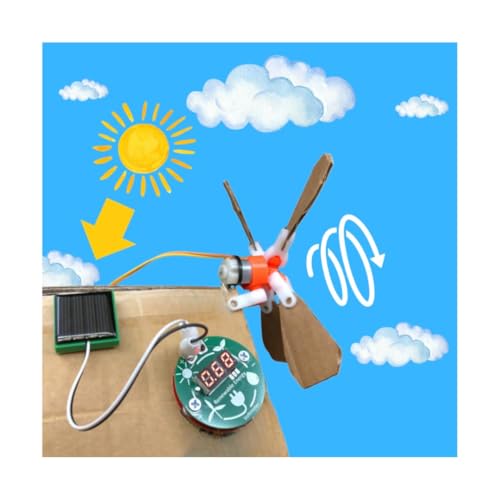
Best for: Students who want to build functional solar and wind projects while learning energy conversion and sustainable engineering. The kit targets hands-on experiments with realistic energy systems.
Why selected: It emphasizes practical projects—solar and wind—plus the broader goal of understanding energy systems. It’s well-suited for group work and classroom demonstrations.
Caution: Some projects may require direct sunlight for solar demonstrations; consider backup indoor setups for low-light environments.
Thames & Kosmos Green Engineering STEM Kit

Best for: Learners who want to model an energy-efficient home and explore green technology. The kit includes a solar panel, storage battery, water pump, LEDs, and sensors for a climate-control theme.
Why selected: It offers a cohesive, real-world project—designing and powering a model home with renewable energy. This kit ties energy concepts to sustainable living practices and green architecture.
Caution: The model home size is substantial; ensure you have adequate space for assembly and display.
Buying Guide: Key Choices for Renewable Energy Kits
What should you consider when choosing a kit? Start with learning goals. If you want broad coverage of solar, wind, and hydro, opt for a curriculum-driven kit like the Renewable Energy Lab. For a single-focus project, Hydropower or Wind Power kits are strong choices. Consider durability, component quality, and compatibility with data collection tools if you plan to measure outputs.
Ease of use matters. For younger ages or beginners, kits with built-in instructions, color diagrams, and fewer tiny parts help maintain engagement. For older students, look for modular systems that allow reconfiguration and deeper exploration of concepts like efficiency, energy storage, and power curves.
Space and setup. If you have limited outdoor space, indoor-friendly wind or solar experiments paired with a small display area work well. For classroom environments, a kit with multiple projects and group activity options can support diverse learners and schedule constraints.
Future-proofing. Some kits are compatible with microcontrollers or sensors for data logging and digital analysis. If you plan to expand experiments, verify compatibility and the availability of add-ons or expansion sets.
Quick comparison
- Best for curriculum-aligned learning: Thames & Kosmos Renewable Energy Lab
- Best for hydro-focused projects: Hydropower Science Kit
- Best for wind hardware and outdoors: Wind Power V5.0
- Best for solar and wind basics: Lectrify Renewable Energy STEM Kit
- Best for model-green home concepts: Thames & Kosmos Green Engineering Kit
Frequently Asked Questions
- What age is appropriate for renewable energy kits?
Most kits target ages 8 and up, with complexity increasing for middle and high school levels. - Can these kits be used in classrooms?
Yes. Several kits include curriculum-driven activities and are suitable for group projects and demonstrations. - Do kits require additional tools?
Some projects may need basic tools, sunlight exposure, or a fan for indoor wind tests; others are ready-to-build out of the box. - Are these kits compatible with data logging?
Many support optional data collection via micro:bit or other sensors; check product details for compatibility. - Which kit emphasizes real-world sustainable living?
The Green Engineering kit focuses on energy-efficient model homes and practical green practices. - Can older students learn about energy storage?
Several kits include storage components and LEDs to demonstrate energy flow and storage concepts.