Looking for the right dog harness? This guide highlights five well-rounded options suited for small, medium, and large dogs, emphasizing no-pull control, comfort, and daily wearability. Each product section includes who it’s best for, why it was selected, and a practical note on limitations. A quick summary table helps compare core strengths at a glance.
| Product | Best For | Key Benefit | Limitations |
|---|---|---|---|
| Matilor Step-in Harness | Small to medium dogs | Breathable air mesh and quick-dry fabric | Restraint options limited to two D-rings |
| rabbitgoo No-Pull Harness | Medium to large dogs | Two leash rings for front/back control | May require precise sizing checks |
| Annchwool No-Pull Harness | Walkers needing visibility | Reflective strip and two-ring design | Padding and fit may vary by breed |
| PHOEPET Reflective Front Clip | Active dogs needing front control | Front clip reduces pulling, high visibility | Three buckles can be a bit fiddly |
| Petank Step-In Harness | Small to medium dogs | Jacquard mesh, easy step-in design | Less rugged for very large breeds |
Matilor Dog Harness Step-in Breathable Vest

The Matilor harness uses breathable air mesh designed for comfort and quick drying. Its step-in design makes it easy to wear, especially for small or anxious dogs. It features two secure D-rings and a strong buckle with safety lock to minimize detachment risk. Best for petite and mid-sized dogs that prioritize airflow and quick dressing. A potential limitation is that it relies on the two-point restraint system, which may offer less control for dogs that pull aggressively on walks.
Rabbitgoo No-Pull Harness With Dual Leash Clips

This harness is designed for medium to large dogs and includes two metal leash rings for flexible control. It’s marketed as no-pull and no-choke with a front chest clip to discourage pulling, plus a rear anchor for casual walks. Ideal for dogs that need training to walk calmly. The listing recommends verifying neck and girth measurements to ensure a proper fit, which is a common pitfall for online harness purchases. Use this when you want clear front-back leash options and straightforward handling.
Annchwool Reflective No Pull Harness
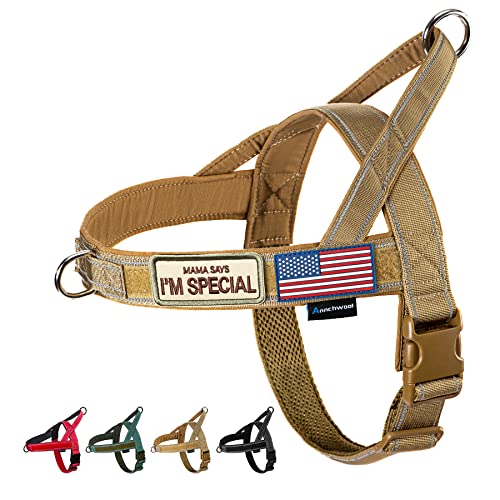
The Annchwool harness emphasizes comfort with wide soft padding and breathable inner materials. A reflective strip enhances visibility during evening walks. With two rings (O-ring and D-ring), it offers flexible leash attachment options for training and daily use. Best for dogs that need extra neck support and higher nighttime visibility. A potential limitation is that fit and padding may vary by dog breed and coat length, so checking measurements is essential.
PHOEPET No Pull Front Clip Reflective Harness
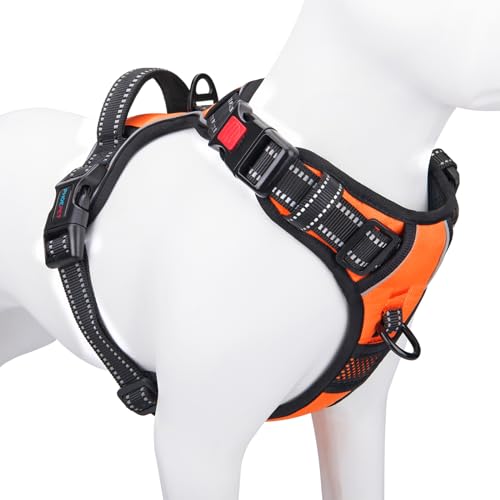
This PHOEPET model uses a front clip to reduce pulling while maintaining reflective visibility for safety in low light. It includes two metal leash loops and three buckles for easy on/off without requiring the dog to go through the head. Best for dogs that pull during walks and for owners who favor front-clip control. A caution is that the three-buckle design may require a moment to secure correctly on first use.
Petank Step-In Harness For Small To Medium Dogs

The Petank harness features jacquard mesh for comfort and breathability, making it a good pick for warmer weather. The step-in design is friendly for dogs who dislike head funnels or head-first harness methods. The product highlights a practical Velcro that doesn’t stick to fur, reducing tangling and shedding. This harness is well-suited for small to medium dogs that benefit from a lightweight, dry-wearing option. It may be less suitable for very active large breeds requiring heavy-duty construction.
Buying Guide: How To Choose The Right Dog Harness
What size and fit should you prioritize? Measure your dog’s neck and chest to pick the right size, then compare girth ranges with the manufacturer’s chart. Consider your dog’s typical activities: daily walking, training, or hiking require different leash attachment points and padding.
Should you choose front-clip or back-clip designs? Front clips encourage your dog to stop pulling, which is helpful for training, while back clips are typically better for steady, casual walks. For dogs that pull hard, a combination with both front and back options is advantageous.
How important is visibility and material? Reflective materials boost safety after dark, while breathable fabrics reduce overheating. Padding matters for long sessions and sensitive skin; avoid overly stiff straps that rub and irritate.
What about durability and maintenance? Look for reinforced stitching, quality buckles, and fabrics that stand up to frequent washing. If your dog is an outdoor enthusiast, prioritize rugged construction and easy-care fabrics like mesh that dries quickly.
For multi-dog households, consider weight distribution and ease of use. Step-in designs can simplify dressing dogs that dislike head access, while multiple leash attachment rings offer flexible control across walking and training scenarios.
FAQ
- What size should I buy for my dog? Always measure neck and chest girth; compare to the brand’s sizing chart to avoid an ill fit.
- Is a front-clip harness better for training? Yes, front clips help reduce pulling by redirecting your dog’s forward motion during walks.
- Are reflective straps worth it? Reflective materials improve visibility in low light, enhancing safety during dusk or night walks.
- Should I choose a step-in design for short-haired dogs? Step-in can be easier for dogs that dislike head access, reducing stress during dressing.
- Can I use a harness for very strong pullers? Look for heavy-duty fabrics, double D-rings, and padded comfort with reinforced stitching.
- How many leash attachment points do I need? Two points (front and back) provide versatile control for training and daily walking.