Answering the need for reliable soil salinity and fertility data, this guide highlights top soil test kits that help you manage irrigation, fertilization, and plant health. Best for newcomers and seasoned gardeners alike, these kits vary from lab-backed analyses to quick at-home readings. Each option is evaluated for accuracy, ease of use, and value. Use this list to choose a kit that matches your garden size, soil type, and goal—whether you’re growing a lush lawn, vegetable plot, or ornamental beds.
| Product | Best For | Format | Why It Stands Out |
|---|---|---|---|
| MySoil Soil Test Kit | Lawn, garden, and all soil types | Mail-in professional lab | 13 nutrient measures with tailored recommendations |
| 8-in-1 Soil Tester with App | Tech-savvy hobbyists and small farms | At-home 8-parameter reading | App tracking and long-term soil trends |
| Rapitest Soil Test Kit | Beginner gardeners on a budget | Colorimetric at-home tests | Simple, quick, and inexpensive |
| NewTest Soil Test Kit | Home gardeners seeking professional insight | 4-parameter at-home tests | 40 tests with clear step-by-step use |
| Dewilde 140 Tests Liquid Soil Kit | Comprehensive fertility monitoring | Liquid tests for multiple nutrients | Broad parameter coverage and rapid results |
The following sections review five highly relevant options. Each product is described with who it’s best for, one clear advantage, and a practical caveat to consider before purchasing.
MySoil Soil Test Kit Review

Best for growers who want comprehensive, lab-backed results without buying multiple devices. MySoil uses a mail-in professional lab analysis to measure 13 plant-available nutrients, including pH. Results typically come back in 6–8 days, making it ideal for seasonal lawn renovations and professional plantings. This kit is well suited for lawns, vegetable plots, trees, or ornamental landscapes where precise nutrient mapping matters. If you need a precise nutrient profile to tailor fertilizers and amendments, this is a strong option.
Limitations: The turnaround time is longer than at-home kits, and it requires mailing samples to the lab. Suitable for users who favor accuracy over speed and are managing larger landscaping projects.
8-in-1 Soil Tester With App Monitoring
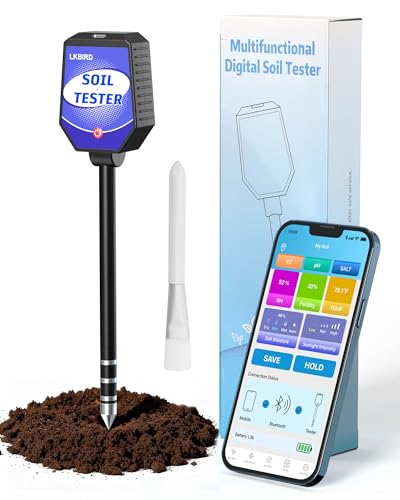
Best for tech-friendly gardeners who want ongoing data. This device measures eight indicators—pH, moisture, temperature, light, salinity, fertility, conductivity, and humidity—then syncs data to a mobile app. It helps users avoid overwatering, over-fertilizing, and misjudging light needs. Choose this if you want quick, in-season adjustments and digital record-keeping for multiple plots.
Limitation: Readings rely on in-soil contact and calibration; results can vary with soil type and moisture. Better for frequent monitoring and trend analysis than a single, definitive soil story.
Rapitest Soil Test Kit

Best for budget-conscious beginners who want a simple at-home option. Rapitest uses a capsule system and patented color comparators to measure soil pH, nitrogen, phosphorus, and potassium. It includes enough components for 20 tests, enabling several sampling locations to get a representative read of your yard or garden. This kit is a good starter tool when you’re learning about soil health and want a straightforward method to guide basic amendments.
Caution: Color interpretation can be subjective; ensure you follow the included instructions carefully for more consistent results.
AAwipes 4-in-1 Soil Test Kit

Best for gardeners who want a compact, all-in-one testing solution. The kit covers pH, nitrogen, phosphorus, and potassium in a single package with sampling accessories. It includes two bottles of test strips, test tubes, 40 tablets, and a color card—making it a practical choice for ongoing seasonal testing and quick checks. Suitable for flowers, lawns, and edible gardens where consistent tracking of nutrient status matters.
Limitation: Primarily at-home tests; results are best used as a general guide rather than a precise lab-grade reading. Best for routine monitoring and quick decision-making.
NewTest Soil Test Kit (40 Tests)

Best for gardeners seeking a robust at-home testing option with professional-grade scope. NewTest provides 40 tests across pH, nitrogen, phosphorus, and potassium, enabling repeated sampling across multiple beds or times of year. The kit emphasizes easy-to-follow instructions and aims to empower users to interpret chemical elements in the soil clearly. Choose this if you want a repeatable testing workflow without sending samples to a lab.
Limitation: While detailed, the interpretation still requires user understanding; results are most actionable when paired with fertilizer knowledge and garden goals.
Soil Test Kit 140 Tests (Dewilde)

Best for comprehensive fertility analysis and frequent testing. Dewilde’s 140-test kit covers pH, ammonia, nitrogen, phosphorus, potassium, and more, offering a broad view of soil health for lawns, gardens, and hydroponic setups. This option supports detailed fertilizer planning and long-term soil management. Choose this if you need a wide parameter set and the ability to test across many samples over time.
Limitation: The breadth of tests may require careful handling of reagents and more careful data interpretation for best results.
Buying Guide: Key Considerations
- Accuracy vs. Speed: Decide whether you need lab-backed accuracy (MySoil) or rapid at-home readings (Rapitest, NewTest).
- Parameters Measured: Identify which nutrients are most important for your crops (pH, N, P, K, salinity, etc.).
- Sample Size and Frequency: Larger yards benefit from more comprehensive kits or lab services; smaller plots can use simpler at-home kits with repeat testing.
- Ease of Use: Consider instructions clarity, color interpretation, and the need for calibration or a companion app.
- Data Handling: Apps and logs help track trends; data-driven decisions improve irrigation and fertilization planning.
- Cost and Value: Balance upfront kit cost with the number of tests and long-term monitoring benefits.
Frequently Asked Questions
- What is the best soil test kit for salinity-specific readings?
– A kit offering salinity or EC/conductivity measurements (such as the 8-in-1 model) provides direct data on salinity levels, along with other soil health indicators. - Do I need a lab test for accurate nutrient analysis?
– For the most precise results across many nutrients, lab-based tests (like MySoil) are preferred, though at-home kits can guide quick decisions for everyday gardening. - How often should I test my soil?
– For established landscapes, testing once a season or after major irrigation/fertilization changes is common. More frequent testing helps track long-term trends. - Can I rely on single-test results for all my plants?
– No. Different plant types have different pH and nutrient needs. Use a kit that covers the key parameters and consider multiple sample locations. - Are colorimetric tests reliable for beginners?
– They are useful for novices but can be influenced by interpretation. Following the included color charts carefully improves reliability. - Is a digital app essential?
– Not essential, but apps help organize results, observe trends, and plan long-term soil management.