When choosing stainless steel gas fittings, accuracy and durability matter. This guide highlights five top products that balance flexibility, corrosion resistance, and ease of installation for common residential gas needs. The best picks cover gas lines for fireplaces, dryers, water heaters, stoves, and pilot tube replacements. Each entry explains who it’s best for, why it was selected, and a practical caveat to consider during installation.
| Product | Best For | Why It Stands Out |
|---|---|---|
| Eastman 72 Inch Gas Line Connector | Gas logs, grills, fireplaces | Long, versatile stainless steel line with compatible MIP fittings for natural gas and LP. |
| HIGHCRAFT 24 Inch Gas Connector | Tankless water heaters, high-demand appliances | High BTU capacity, corrugated flexibility, CSA certified. |
| Eastman 48-In Gas Appliance Installation Kit | General indoor/outdoor gas appliance installs | ArmorBoost EFV protection and easy installation kit. |
| ETERMETA 36 Inch Pilot Tube Kit | Pilot burners and valve connections | Flexible stainless steel line with brass compression fittings for easy replacement. |
| Alloxity 48″ Flex Gas Line with Fittings | Range, dryer, water heater installations | Coated 304 stainless steel, multiple fittings for versatile connections. |
Eastman 72 Inch Gas Line Connector with 3/4″ x 1/2″ Fittings
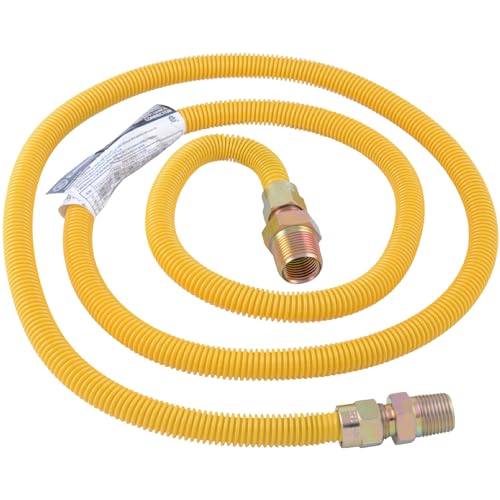
Best for mid-size gas fixtures requiring a longer flexible run. This stainless steel line is designed for natural gas and LP gas air mixtures and suits indoor and outdoor settings like gas logs, grilles, and space heaters. The epoxy coating provides rust, stain, and UV resistance, extending service life in challenging environments. It requires no special tools for installation; simply clean threads, apply sealant, and attach to a shut-off valve.
Who it’s best for: homeowners needing a durable, long connector for varied gas appliances. Why selected: high flexibility with deep corrugations and robust stainless steel construction. Caution: ensure leak testing after installation to confirm seal integrity.
HIGHCRAFT 24 Inch Yellow Coated Stainless Steel Gas Hose

Best for high-demand appliances such as tankless water heaters or rooftop units requiring substantial bend radius and reliable flow. The 1” outer diameter and 3/4” inner diameter with 3/4” FIP x 3/4” MIP fittings deliver strong performance while staying flexible thanks to a corrugated design. It’s CSA certified and tested for up to 30 bends without leakage.
Who it’s best for: users with tight installation spaces and high BTU needs. Why selected: high temperature tolerance and durable coating. Caution: check for compatibility with local code requirements and ensure the coating remains intact after installation.
Eastman 48-in Inlet/Outlet Stainless Steel Gas Kit

Best for standard home appliance installations requiring a complete kit. This Eastman kit includes a 48-inch gas connector, ArmorBoost EFV, fittings, thread sealant, and a leak detector. It’s designed for safe indoor and outdoor use and protects connections from corrosion and rupture.
Who it’s best for: homeowners replacing an old connection with a full installation package. Why selected: integrated safety features and easy-to-follow components. Caution: follow the included leak detector guidance to ensure a proper seal after assembly.
ETERMETA 36 Inch Pilot Tube with Fittings Kit

Best for pilot burner replacement and natural gas or propane pilot assemblies. The kit includes 1/4″ OD stainless steel flex tubing and brass compression fittings with male and female nuts. It provides flexibility to route pilot lines without the need for extensive flaring.
Who it’s best for: technicians performing pilot line replacements on gas appliances. Why selected: the kit offers a practical balance of flexibility and durable brass/brass-fittings. Caution: verify thread sizes and compatibility with existing valves before installation.
Alloxity 48″ Flexible Gas Line With Fittings

Best for ranges, dryers, and water heaters needing a versatile connector with multiple adapter options. The 304 stainless steel core resists kinking and corrosion, and the epoxy coating adds protection against stains and UV exposure. Includes a set of fittings for flexible installation in various layouts.
Who it’s best for: homeowners seeking a ready-to-install flexible line with diverse connections. Why selected: strong corrosion resistance and adaptability. Caution: ensure the gasket/taper seals are compatible with local code requirements and use the provided gas teflon tape as directed.
Buying Guide: Stainless Steel Gas Fittings For Homes
What to consider when selecting gas fittings
- Material and corrosion resistance: stainless steel offers durability in indoor and outdoor environments. Look for epoxy coatings for extra protection.
- Fitting compatibility: verify FIP/MIP sizes and thread directions to match shut-off valves and appliances.
- Flexibility and length: corrugated designs help route lines in tight spaces but ensure adequate clearance to prevent kinking.
- BTU rating and flow capacity: higher BTU needs require robust lines with sufficient internal diameter.
- Installation safety: use sealant where needed and perform leak testing after assembly.
Choosing by appliance type
- Gas logs and fireplaces: long flexible lines with rust protection reduce wear in outdoor vents.
- Water heaters and tankless heaters: high-flow connectors minimize pressure drop and ensure steady gas supply.
- Gas ranges and dryers: flexible lines with multiple fittings simplify multi-connection setups.
- Pilot burner systems: dedicated pilot tubes with compression fittings reduce maintenance time.
Installation tips
- Clean threads before applying sealant and tighten connections to manufacturer guidelines.
- Test for leaks with a soap solution or approved leak detector after installation.
- Avoid bending lines too sharply; use elbows or proper supports to prevent kinking.
Common questions
- What is the difference between FIP and MIP fittings? FIP is female Iron Pipe, MIP is male Iron Pipe; matching both sides prevents leaks.
- Are stainless steel gas lines safe indoors? Yes, when installed per code and with proper sealing and leak testing.
- Can I bend a gas line by hand? Moderate bending is okay; avoid sharp kinks that can restrict flow.
- Do I need a professional to install gas fittings? For most residential installs, following code and safety practices is essential; consider a licensed technician for complex projects.
- How do I test for leaks correctly? Apply a soap solution to joints or use a certified leak detector; no bubbles means no leak.
- What should I avoid with gas fittings? Do not overspray sealant, over-tighten fittings, or mix incompatible materials.
Quick reference: key product details
| Product | Length/Size | Core Material | Notable Feature |
|---|---|---|---|
| 72 in, 3/8 in OD | Stainless Steel | Wide compatibility, epoxy coating | |
| 24 in, 1 in OD | Stainless Steel | High BTU capacity, CSA certified | |
| 48 in | Stainless Steel | ArmorBoost EFV, leak detector | |
| 36 in, 1/4 in OD | Stainless Steel | Brass compression fittings | |
| 48 in, 5/8 in OD | Stainless Steel | Multiple adapters included |
FAQ — Quick answers
- Q: Are these fittings suitable for outdoor use? A: Many are rated for indoor/outdoor use; check the product specs for weather resistance.
- Q: Do these require special tools? A: Most do not; some installations may require standard wrenches and thread sealant.
- Q: Can I connect these to any gas appliance? A: Confirm valve sizes and thread types match your appliance’s inlet/outlet.
- Q: How often should I inspect gas lines? A: Inspect for corrosion, leaks, and physical damage during routine maintenance or after installation.
- Q: Do these come with warranties? A: Refer to each product listing for warranty details provided by the manufacturer.