Answers to common buyer questions: Which tape-in remover is best for quick removal without damage? This guide highlights five reliable options, suitable for both home DIY and professional use. Each product is evaluated for skin-friendliness, ease of use, and residue handling, with clear guidance on who should buy it and why. A quick comparison table helps you choose at a glance.
| Product | Best For | Why Selected |
|---|---|---|
| Piaou Fast Acting Remover | Sensitive scalps; quick removal | Citrus-based, oil-based formula; gentle on skin; easy cleanup |
| MIILYE Tape In Remover | Everyday use; versatile removal | Citrus extracts; non-greasy; easy rinse; skin-friendly |
| Dolahair Tape-In Remover Spray | Low-residue removal | Designed for little to no residue; simple 1-2 minute sit time |
| Big Kizzy Remover System | Two-step, professional-style removal | Remover 1 plus Remover 2 for complete removal and residue control |
| GOO GOO Tape-In Remover | Fast, targeted removal | Direct application; drops-based method; compact options |
Piaou Tape-In Remover

Best for: Sensitive scalps and quick release. Piaou’s fast-acting, oil-based remover uses citrus oils to loosen tape bonds without pulling. It is particularly suitable for those with delicate skin or hairlines, and for users who want minimal tugging during removal.
Why selected: The formula emphasizes gentleness and ease of cleanup. Instructions emphasize spraying on tape tabs, waiting briefly, then gently separating, followed by shampooing to remove residue. The pleasant scent adds a more comfortable experience.
Limitation: Some users may need more time on very stubborn bonds or multiple applications for older tapes. Not recommended as the sole solution for extremely tough adhesive without repeated use.
MIILYE Tape In Remover
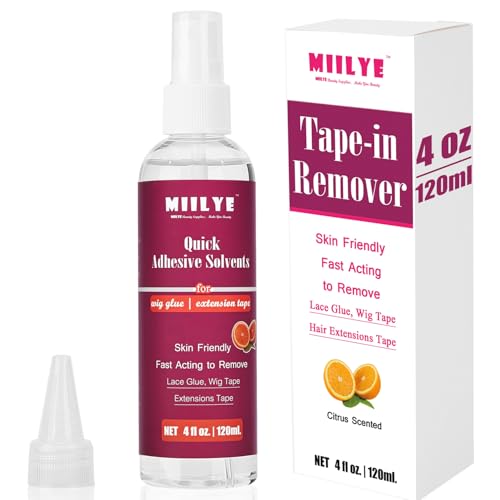
Best for: General at-home use and professionals seeking a versatile remover. MIILYE combines fast action with skin-friendly citrus extracts and no greasy residue, making cleanup straightforward after removal.
Why selected: It advertises quick removal times for both tape-ins and lace front wigs, with a focus on non-greasy residue and easy shampooing. It also supports reuse scenarios by keeping hair and extensions clean during the process.
Caution: While effective, very dense or aged adhesive may require additional passes or time for full removal.
Dolahair Tape-In Remover Spray

Best for: Users seeking minimal residue and simple steps. Dolahair’s remover is designed to leave little to no residue, with straightforward spray-and-wait usage.
Why selected: The product highlights a user-friendly approach: spray, wait 1-2 minutes, then separate the tabs. It notes no latex, harsh solvents, or toxic ingredients, fitting sensitive skin needs.
Caution: The guidance suggests avoiding harsh solvents on skin; use a skin-safe adhesive solvent if needed, as rubbing alcohol may irritate some skin types.
Big Kizzy Tape-In Remover System

Best for: Professionals and DIYers who desire a two-product system for complete removal. Remover 1 quickly loosens bonds; Remover 2 handles residue.
Why selected: The two-bottle approach is designed to minimize hair pulling and residue, with a maker claim that tape comes off in one piece. It’s noted as made in the USA and focuses on hair preservation during removal.
Caution: The system’s effectiveness may depend on the brand of tape used on the extensions; different brands might respond differently to the same remover.
GOO GOO Tape-In Remover

Best for: Quick, targeted removal with minimal steps. GOO GOO emphasizes a simple three-to-five drop method for effective adhesive dissolution.
Why selected: It highlights a direct application approach and options for different bottle sizes to suit varied usage, making it suitable for both home users and stylists who need portability.
Caution: For stubborn bonds or hard-to-reach areas, extra drops may be required, which could slightly lengthen the removal process.
X10 Pro-Tools Tape-In Remover

Best for: Salon-grade removal with skin-friendly formulation. The X10 Pro-Tools remover is alcohol-based and designed to dissolve strong adhesive bonds quickly while minimizing residue when used with Smart Tabs.
Why selected: The product emphasizes fast action, minimal residue, and reuse-friendly properties—helpful for repeated installations and quick turnarounds.
Caution: Alcohol-based formulas can dry or irritate sensitive scalps if overused; use sparingly on delicate skin.
WENNALIFE Tape-In Remover

Best for: Users seeking a citrus-infused, quick-acting remover with broad compatibility. Wennalife targets tape-ins, lace wigs, and toupees.
Why selected: It combines fast adhesive dissolution with a natural citrus oil base and no harsh chemicals. The process includes applying, waiting, and washing to remove residue.
Caution: As with all removers, ensure complete rinsing to remove solvent traces from hair and scalp.
Buying Guide: Key Purchase Considerations
What type of tape is used on your extensions? Removers may react differently with various brands (e.g., strong vs. soft bond tapes). Check compatibility with your specific extensions.
How sensitive is your scalp? If you have sensitive skin or a history of irritation, choose a citrus-based, oil-free or mild formula and avoid harsh solvents.
Do you need quick turnaround or deep residue removal? For faster removals, look for high-acting formulas. For removing sticky residue, consider systems that separate bonds and clean residue in a second step.
Size and reuse: Larger bottles or two-step systems may offer better value for frequent users, while smaller bottles suit casual, infrequent removal.
Ease of use: Some products require multiple steps, while others use a simple spray or drop method. Consider your comfort with DIY removal versus professional use.
Frequently Asked Questions
- What is the safest way to remove tape-in extensions without damage? Use a remover that loosens adhesive bonds first, then gently separate tabs with minimal tension, followed by thorough washing to remove solvent residue.
- Can I reuse my extensions after removal? Some removers enable hair reuse if you carefully remove the tape and properly clean the bonds. Check the brand’s guidance for reuse compatibility.
- Should I avoid certain solvents near the scalp? Yes. Avoid harsh solvents on the skin; look for skin-friendly ingredients such as citrus-based oils or alcohol-free formulas if possible.
- How long should I wait after applying remover? Most products suggest a short dwell time of 1–5 minutes, then gently separate the extensions. Always follow the product’s directions for best results.
- Is residue a concern after removal? Residue can be an issue with some removers; opt for products marketed as low-residue or designed for easy rinsing to minimize buildup on hair and scalp.
- Are there safety considerations for minors or sensitive individuals? Choose mild, scented-free or citrus-based removers if sensitivity is a concern, and perform a patch test on a small scalp area when using a new product.