Answer: A white balance reference card helps photographers quickly achieve accurate color in diverse lighting. This guide compares five top options to help you choose the right card for your gear and shooting style. Best for hobbyists needing pocket-sized accuracy, professionals seeking portable calibration on location, and videographers who require dependable color in variable light.
Summary table of selected products:
| Product | Best For | Key Benefit | Compactness |
|---|---|---|---|
| Anwenk Grey White Balance Card (Compact) | Travel photographers | Scratch-resistant, waterproof 18% gray for quick setup | Very portable |
| Lightdow 12×12 Inch White Balance Card | Studio and on-site shoots | Larger reference area for precise adjustments | Moderate |
| DGK Color Tools 5×7 Set | Video professionals | Two charts with grayscale and colorbar for calibration | Moderate |
| WhiBal G7 Pocket Card | Precision color work | Certified neutral accuracy with Photoshop/Lightroom compatibility | Very portable |
| Anwenk Large Gray Card 5.3″ x 7.28″ | Studio and video | Large surface for easy balance in one shot | Large |
Anwenk Grey White Balance Card 18% Compact
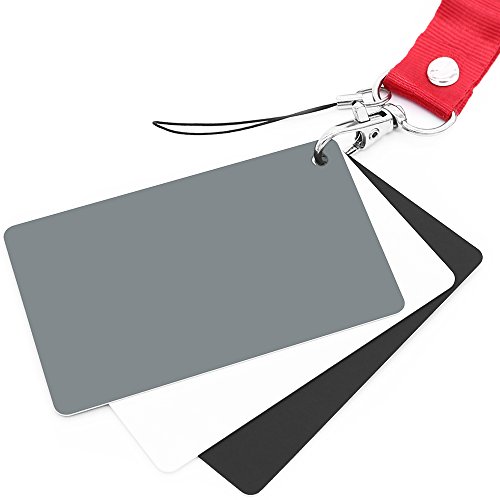
The Anwenk compact 18% gray card provides a non-reflective, matte finish that resists scratches and water exposure. It is designed for quick setup with any digital camera and is suitable for DSLR, video, film, and photography workflows. Card size makes it pocketable for on-the-go shooters who need fast, reliable color balance. Best for photographers who value portability without sacrificing calibration accuracy, especially when traveling light.
Who it’s best for: travelers, documentary shooters, and wedding photographers who need a durable, pocket-friendly reference on location. Why selected: its small footprint makes it easy to carry, and the neutral gray ensures consistent exposure and color balance across scenes. Caution: very bright lighting can wash out subtle color checks on smaller cards; ensure proper framing in-camera to get a correct reading.
Lightdow 12×12 White Balance Gray Card

The Lightdow reference card offers a larger gray surface (12 x 12 inches) with a gray side that features aReflectance around 17.8% and a density of 0.74, designed to minimize exposure error. It provides a practical balance between size and accuracy for studio or field use. Best for shooters who want a bigger reference area to fine-tune color without moving into a full white balance card kit.
Who it’s best for: studio photographers and on-location crews who need a larger, more forgiving target for quick calibration. Why selected: its larger surface helps ensure even lighting references across frames. Caution: Folded or rolled storage can lead to creasing if not kept flat; carry with a stiff case or bag.
DGK Color Tools DKK 5×7 Set

The DGK Color Tools set includes two 5×7″ charts with 12% and 18% gray, plus a colorbar and grayscale combination for calibrated video work. The bundled frame stand and user guide enhance usability for professionals who require consistency across shoots. Best for videographers and filmmakers who rely on repeatable color across scenes and lighting changes.
Who it’s best for: video producers, documentary crews, and editors who depend on precise color pipelines. Why selected: the dual-chart approach streamlines calibration and cross-checks with a portable, all-in-one package. Caution: requires more space than pocket cards; ensure you have a stable surface for the frame stand.
WhiBal G7 Certified Neutral Pocket Card

The WhiBal G7 pocket card claims high-precision neutral readings and is certified to meet tight specs, often favored by photographers who design color workflows around Adobe Photoshop and Lightroom. This card is designed for compactness, making it ideal for field shoots where portability matters. Best for: color-critical projects and photographers who need consistent in-camera reference that translates well into post-production.
Who it’s best for: professionals who require validated neutrality and easy integration with post-processing software. Why selected: its certification provides an extra layer of confidence for color workflows. Caution: premium certification may come with higher cost and smaller reading areas than larger cards.
Anwenk Large Gray Card 5.3″ x 7.28″
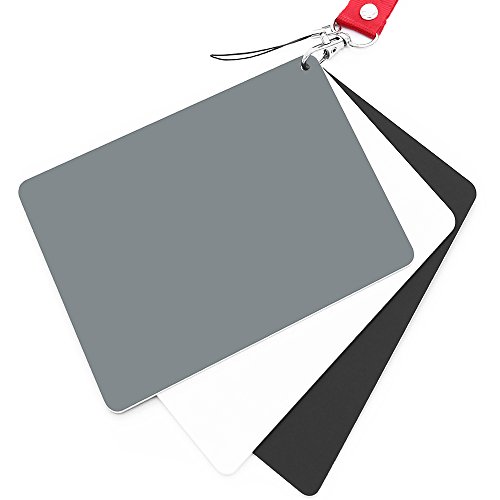
The large Anwenk gray card provides a spacious surface for easy balance setting. Its matte, non-reflective finish reduces glare, and the card is waterproof and scratch-resistant for robust field use. Best for studio setups and videographers who prefer a larger target for quick adjustments. Caution: larger size may be less convenient for tight pockets or camera bags when traveling light.
Buying Guide: How to Choose a White Balance Reference Card
- Size and portability: Smaller cards fit in pockets or on keychains; larger cards offer a bigger target for faster, more reliable readings in busy lighting.
- Material and finish: Matte, non-reflective surfaces minimize glare and reflections that can skew readings. Waterproofing adds durability for outdoor shoots.
- Color accuracy: Look for 18% gray as a standard reference, and consider certified or colorbar-enabled cards for post-processing consistency.
- Complementary features: Some sets include color bars, grayscale, stands, or frames—these improve calibration reliability in video and multi-camera setups.
- Intended use: For field trips, pocket cards work well; for studios or frequent on-location shoots, larger cards or sets with stands may be advantageous.
- Post-processing compatibility: Cards designed with Lightroom or Photoshop workflow in mind simplify color matching in post.
Frequently Asked Questions
- What is a white balance reference card used for? It provides a neutral target to calibrate color and exposure, ensuring consistent color across lighting conditions and cameras.
- What does 18% gray mean? It represents a middle gray used as a standard reference to balance color and exposure readings.
- Should I choose a larger card for video work? Yes, a larger surface often yields more reliable readings when lighting is uneven or when you need to calibrate across a wider scene.
- Do I need certification for a white balance card? Certification can increase confidence in neutrality, especially for professional color workflows.
- Can these cards be used with smartphones or mirrorless cameras? Yes, most are camera-agnostic and work with any digital camera that supports gray balance calibration.
- Is a color chart necessary in addition to a gray card? A color chart helps calibrate color accuracy beyond gray balance, especially when color casts are dominant in the scene.